Alar Base Reduction: Scars, Recovery and Options in Thailand
Alar base reduction, also called alarplasty or nostril reduction, narrows the nostril base. It can be done alone or with rhinoplasty in Thailand, which changes other parts of the nose.
AsiaPatient isn't a hospital, clinic or agency and doesn't recommend an operation for an individual reader.
Clinics cannot pay to be listed or ranked higher on AsiaPatient.
What alar base reduction changes
Yanhee's nose-implant page describes alarplasty this way: "Alarplasty removes a small amount of skin at the base". That is the area to ask the surgeon to mark when discussing nostril narrowing.
Describe what you want to change in your own words. Ask which part of the proposed operation addresses that change, and which features you want to keep.
Alar base work is one part of rhinoplasty
Yanhee distinguishes alar reduction from tip-plasty with a cartilage graft, a piece of firm tissue used to shape the tip. It also lists septoplasty separately, describing correction of a deviated septum, the internal dividing wall of the nose, which may improve breathing.
If your concern is nostril width, ask whether the plan involves the base alone. If you also want a change to the tip or bridge, ask the surgeon to explain each proposed step separately.
Can it be done alone or with rhinoplasty?
Wansiri lists alarplasty as its own procedure and says it can be performed with rhinoplasty. Ask whether either approach fits the change you want, and why.
Keep the discussion specific to your nose and goals. The Asian rhinoplasty in Thailand guide covers broader planning questions you can bring to that consultation.
Alar base reduction in Thailand: procedure and price
Wansiri states: "Alarplasty can be performed together with Rhinoplasty." Ask it to specify the proposed procedure, anesthesia and follow-up for your case.
Yanhee's public price list prints "Alar Reduction" at THB 30,500, with "None" in the hospital-stay column, read 4 November 2026. Ask for the inclusions and any proposed additional procedures in writing.
For broader seller prices, see rhinoplasty cost in Thailand. Request a quote that identifies alarplasty specifically, including the planned appointments and any stitch removal.
Incisions and where alar reduction scars sit
The base is where Yanhee describes removing skin during alarplasty. Ask your surgeon to draw the proposed incision, meaning the surgical cut, on a photograph or diagram of your nose.
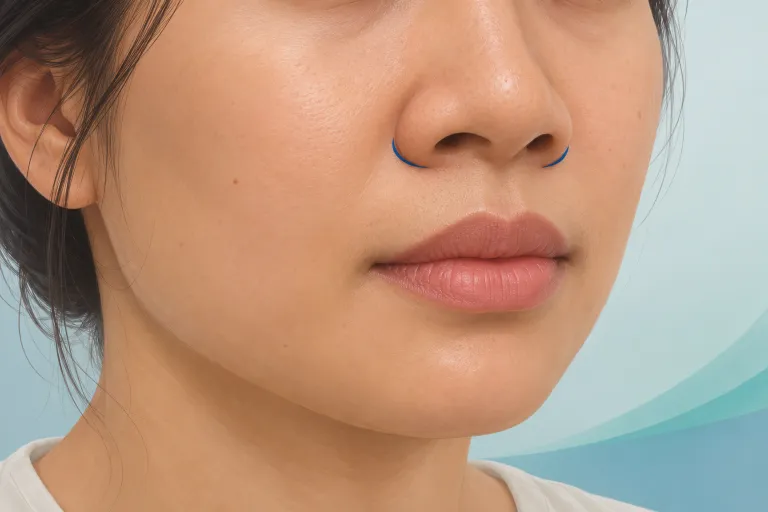
Have the surgeon identify where each resulting scar would sit, including any part inside the nostril or on the outside. Ask how the proposed incision relates to the amount and location of the change you want.
Questions about scar placement and healing
The American Society of Plastic Surgeons (ASPS) lists poor wound healing or scarring among rhinoplasty risks. Discuss how that applies to the proposed alar operation before agreeing to it.
Ask what the scar may look like after healing, what care it would need, and what happens if you dislike its appearance. Request photographs of healed incisions from the technique the surgeon proposes, with the time since surgery stated.
Who may discuss alar base reduction with a surgeon
Start the consultation with the change you want, rather than choosing an incision name yourself. Ask whether narrowing the nostril base would address that goal and how the surgeon assesses your nose before deciding.
If you have difficulty breathing through your nose, raise that separately. Ask what assessment is needed and whether the proposed operation would address it.
General rhinoplasty suitability doesn't replace an alar assessment
Cleveland Clinic says rhinoplasty candidates should have finished growing, be physically healthy and not smoke. They should understand the operation's limits, have reasonable goals and want surgery for their own reasons.
Ask for an assessment of the particular alar procedure being proposed, including your health history and any previous nasal surgery.
Questions to bring to the consultation
- Which part of my nose would you change, and what would you leave alone?
- Would you propose alarplasty alone or combine it with rhinoplasty?
- Where would you place the cuts and scars, and why?
- How would you assess my breathing before choosing the operation?
- What risks apply to my proposed procedure?
- When would you check healing and remove any stitches?
- Who would assess a concern after I return home?
Ask for the answers in a written plan you can review before booking. If the proposal includes several procedures, request a separate explanation of each one.
Recovery after alar base reduction, and planning a Thailand stay
Ask for a recovery schedule for your exact operation, with separate dates for follow-up, work and exercise. If alarplasty is being combined with other nasal work, ask which part of the plan determines those dates.
For alarplasty, Wansiri prints an operation time of "30 to 45 minutes" and labels an overnight stay "Not necessary". Ask for the healing and appointment schedule as well as the operation time.
For broader rhinoplasty, Yanhee prints splint removal at four to seven days and an almost normal-looking face at two to three weeks. It says a follow-up check is usually scheduled within seven to ten days.
Cleveland Clinic's medical explainer gives these general rhinoplasty milestones:
- A splint for one or two weeks
- Return to work or school in one to two weeks
- Swelling for four to six weeks
- About 90% of swelling gone after three months
- Possible remaining swelling up to one year
Cleveland Clinic's rhinoplasty service page gives different general rhinoplasty swelling milestones: about 75% gone by the end of weeks two to four, with the last swelling resolving at 12 to 18 months.
Healing can vary, as Cleveland Clinic explains. Ask which general rhinoplasty milestones are relevant if you're having alarplasty alone.
What this means for a patient flying to Thailand
For rhinoplasty, Phuket Plastic Surgery Institute (PPSI) says patients "may be required to remain in Thailand for 2 weeks" so their surgeon can monitor progress. That is its conditional rhinoplasty stay advice.
Ask your surgeon for a written departure plan for your operation, including appointments and any stitch removal before departure. Request a separate answer about when you can fly and what happens if healing changes the proposed date.
The rhinoplasty recovery in Thailand guide covers broader recovery and travel questions. Bring your intended travel dates to the consultation for the surgeon to assess.
Risks, aftercare, and alternatives to discuss
ASPS lists anesthesia risks, changes in skin sensation, difficulty breathing, infection, poor healing or scarring, skin discoloration, swelling, an unsatisfactory appearance and possible revision surgery. These are general rhinoplasty risks to discuss in relation to your proposed operation.
ASPS also lists a hole in the septum as rare. It says further surgery may be needed and that correction may be impossible.
The UK National Health Service (NHS) lists heavy nosebleeds among possible rhinoplasty complications. It also says any operation carries a small risk of excessive bleeding, a blood clot in a vein, infection or an allergic reaction to the anesthetic.
Ask which risks apply to alarplasty alone and which relate to any additional surgery. Request instructions on symptoms that need prompt attention and whom to contact outside appointment hours.
Aftercare to discuss
Yanhee's nose-reshaping guidance says soreness and swelling ease gradually. It gives a possible return to work at one to two weeks and about one to two months before strenuous lifting or exercise.
Ask for your own instructions on cleaning the incision, touching your nose, work and exercise. Confirm whether any advice changes when nostril narrowing is combined with other surgery.
Alternatives to discuss with your surgeon
Yanhee describes tip grafting, alar reduction and septoplasty as distinct procedures; ask why the surgeon proposes one or a combination.
If the plan mentions an open or closed approach, ask how that relates to the alar incisions. The open versus closed rhinoplasty guide explains those broader approaches.
You can also ask what happens if you choose no surgery. The NHS says rhinoplasty results can't be guaranteed.
In this section: rhinoplasty in Thailand, Asian rhinoplasty, rhinoplasty in Bangkok, rhinoplasty before and after, rhinoplasty clinics in Thailand compared, what rhinoplasty costs in Thailand, how long rhinoplasty results last, non surgical rhinoplasty, open vs closed rhinoplasty, rhinoplasty recovery, revision rhinoplasty, septorhinoplasty rhinoplasty, swelling rhinoplasty, tip rhinoplasty, types rhinoplasty and risks rhinoplasty.
Frequently asked questions
Is alar base reduction the same as rhinoplasty?
Alar reduction concerns the nostril base. Yanhee lists it separately from tip-plasty and septoplasty, while describing procedures that may be combined with nose reshaping.
Where are alar reduction scars?
Ask the surgeon to mark the exact scar location for the proposed technique. Yanhee describes skin removal at the base; ask where the cuts would run in your case and how visible they may remain.
Can alarplasty be done with rhinoplasty?
Wansiri Hospital says the procedures can be performed together. Ask why a combined operation is being proposed and what each part would change.
How long does recovery take after alar base reduction?
Request separate estimates for returning to work, stitch removal and swelling. Ask whether the schedule you receive is for alarplasty alone or for the full combination of procedures in your plan.
What are the risks of nostril reduction?
Discuss scarring, healing, infection and breathing with your surgeon. ASPS includes these in its general rhinoplasty risk guidance, along with possible revision surgery; ask how they apply to your alar operation.
How long should I stay in Thailand after alar base reduction?
Ask your treating surgeon to set the stay around your operation and follow-up appointments. Confirm the planned departure date, whether stitches need removal before you leave, and who will handle concerns once you're home.
Read next
- Tip rhinoplasty: reshaping only the tipWhat tip rhinoplasty changes, the cartilage and graft techniques, when a tip-only operation is enough, recovery, risks and revision figures from studies.
- Types of Rhinoplasty: Open, Closed and Other TermsUnderstand cosmetic, functional, open, closed, reduction and augmentation rhinoplasty, and what to ask about your surgical plan in Thailand.
- Male rhinoplasty: goals, structure and questions to askHow rhinoplasty planning differs for men, what to describe in a consultation, and the questions to settle before surgery in Thailand.
- Dorsal hump reduction: what nose-bridge surgery can changeWhat a dorsal hump is made of, how surgeons reduce it, why no fixed amount is safe to remove, and what to ask before surgery in Thailand.
Ask a Thai Surgeon Whether Nostril Narrowing Suits Your Nose
Tell us the procedure, your budget and your dates, and any hospitals you are considering.
Get My Free Quote →Free, no obligation. Nothing goes to a clinic without your OK.