Seroma After a Tummy Tuck: What It Is, Signs, and When to Contact the Surgeon
A seroma after a tummy tuck is fluid collected in the surgical area. Contact your operating team about new or increasing swelling, discomfort, drainage, or a wound concern.
Ask the team to assess the change and tell you what to do next. Don't try to diagnose or drain a suspected seroma yourself.
When to seek urgent assessment
The NHS says to contact the clinic where the operation was done as soon as possible if you have severe pain or any unexpected symptoms. Cleveland Clinic says to contact a healthcare provider right away for complications such as severe pain, excessive bleeding, swelling, or fluid or pus leaking from an incision site.
The Aesthetic Society identifies shortness of breath, chest pain and an unusual heartbeat as red flags.
If you can't reach the operating team, get urgent medical help where you are and tell them about the operation.
The tummy tuck in Thailand overview and the tummy tuck risks page cover the wider picture. Ask your surgical team for the warning signs and emergency contact instructions that apply to your operation.
What a seroma after a tummy tuck is
MedlinePlus describes a seroma as a fluid collection where surgery took place. It uses the wording "may need to be drained."
The Cleveland Clinic tummy-tuck guide also lists seroma among possible complications. A description of swelling alone isn't a diagnosis; ask the operating team what is causing your concern.
If you've already had surgery, direct questions about your own recovery to the team that operated.
Clinics cannot pay to be listed or ranked higher on AsiaPatient.
What you may notice, and who should assess it
Swelling can have more than one cause
The UK National Health Service (NHS) describes temporary fluid-filled swelling above the scar among common effects after abdominoplasty, another name for a tummy tuck. It separately lists a collection of fluid in the area that was operated on, and a collection of blood underneath the skin, among possible complications.
Cleveland Clinic lists pain and swelling, bleeding, infection and seroma as possible complications. Let your operating team assess which explanation applies to you.
For general recovery context, see tummy tuck recovery. Ask the surgeon whether a change in swelling needs a separate appointment from your scheduled follow-up.
Contact the operating team about a new or changing concern
The American Society of Plastic Surgeons (ASPS) says recovery instructions may include concerns to look for at the surgical site or in your general health. They may also cover wound and drain care and when to follow up.
When contacting the team, describe what changed and when you noticed it. Ask who will review the concern, where you should be assessed and how soon.
You could write: "I've noticed a change in swelling after my tummy tuck. Can the operating team tell me where and when I should be examined?"
How clinicians may manage a tummy tuck seroma
Drainage is a clinician decision
MedlinePlus lists seroma among the risks of abdominal wall surgery. Drainage might be needed.
Ask the operating team whether they recommend observation or treatment after assessing you. If they recommend drainage, ask who will perform it, where it will happen and what follow-up they want afterward.
Bring questions about scans or medicines to the same team. Ask what would change the plan and how to contact them between appointments.
Drains and follow-up are specific to the operation
ASPS says small, thin tubes may temporarily be placed under the skin to drain excess blood or fluid. Ask your surgeon what the plan is for any drain used in your operation.
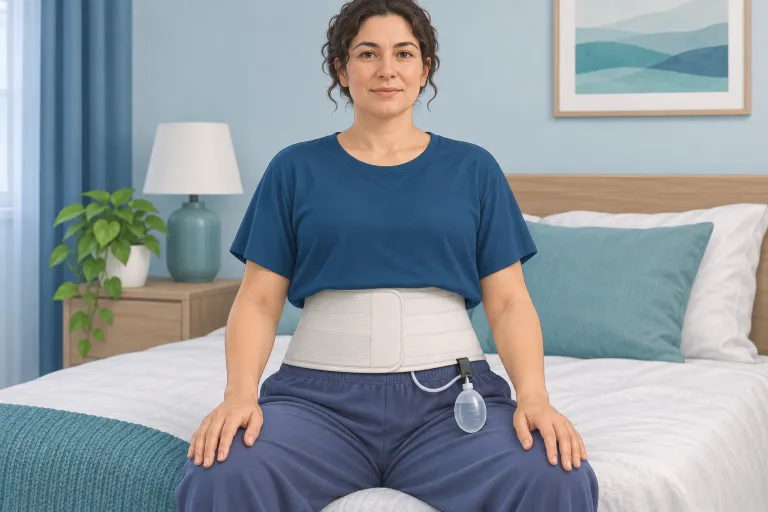
Bangkok Hospital describes its approach: "Insert a drain for lymph and blood, which will be removed when the drainage is minimal". Ask your own team how they decide when to remove a drain.
If swelling changes while a drain is in place or after it has been removed, contact the team for assessment. Ask whether your next appointment needs to change.
What studies report about seroma rates and prevention
Reported rates
Each percentage below comes from a different study of patients and surgical approaches. Ask your surgeon how the findings relate to the operation you had or are considering.
| Study and patients | Reported seroma finding |
|---|---|
| Dutot and colleagues, 2018: retrospective review at Hopital Saint Louis of 1,128 patients treated from 1990 to 2014 | Seroma in 2.7% of patients |
| Stewart and colleagues, 2006: case-note review of 278 consecutive patients at one UK institution over five years | Seroma in 5% of patients, reported among early complications |
| Seretis and colleagues, 2017: systematic review and meta-analysis of nine prospective controlled studies, involving 664 abdominoplasty patients | Seroma in 7.5% of the prevention group and 19.5% of the control group |
A meta-analysis combines results from included studies.
Prevention methods are decided before and during surgery
Several studies compare drains with surgical techniques intended to reduce fluid collection. These are questions for a discussion with the surgeon about the operation, including the technique already used if you've had surgery.
Jabbour and colleagues' 2017 systematic review and meta-analysis included seven studies: three randomized controlled trials and four retrospective studies. It examined progressive-tension sutures, a stitching technique, with and without drains.
The review reported a lower seroma rate with these sutures plus drains than with drains alone. It found no difference between sutures plus drains and sutures alone in the included comparisons.
Vernier-Mosca and colleagues, 2021 reported a retrospective comparison at one institution in France involving 215 patients. There were 162 patients in the drainage group and 53 in the no-drainage group; the authors found no significant difference in postoperative seroma occurrence.
Paranzino and colleagues, 2023 reviewed 454 abdominoplasties in a single surgeon's retrospective chart review over 20 years. Seroma occurred in 24.7% of the 194-patient drain group and 0.0% of the 260-patient progressive-tension-suture/no-drain group.
That comparison paired the no-drain approach with a stitching technique. Ask your surgeon which parts of the surgical method apply to your case before using either group's figure to judge your risk.
Liao and colleagues' 2024 systematic review and meta-analysis analyzed 20 articles across nine technique categories. Progressive-tension and quilting sutures had the most data supporting a statistically significant reduction in seroma.
The review also reported support for tissue adhesives. Increasing the number of drains didn't have the same support in that review.
Rao and colleagues' 2024 systematic review and meta-analysis included 24 studies with 750 patients, including two randomized controlled trials. It reported lower seroma rates with progressive-tension suturing than with drains.
Ask the surgeon to explain the proposed prevention method and the follow-up plan if fluid collects despite it. If you have swelling now, ask for an assessment of that concern.
If your surgery was in Thailand
Set the follow-up route before you travel
Bumrungrad Hospital states: "Accumulation of fluid under the skin may require additional outpatient visits." Ask your operating hospital how additional reviews would be arranged.
Put these questions to the team before departure, or contact them now if you're already home:
- Who assesses new swelling while I'm still in Thailand?
- Which appointments should happen before I leave?
- Who can examine me after I return home, and how will they contact my surgeon?
- If further treatment or surgery is needed, where would it happen?
- What would additional appointments or treatment cost?
- Which number should I use for an urgent concern, including outside clinic hours?
For budgeting questions, see tummy tuck cost in Thailand. Ask the hospital to put the arrangements for additional follow-up and its charges in writing.
Ask the operating team about your flight
If you have possible fluid collection and a flight booked, ask the operating team whether you need assessment before traveling. Ask whether the concern changes your departure plan or the appointments you need first.
If you're already home, ask where an examination can happen locally. Give the local clinician the operating team's contact details and ask how they will share the assessment.
In this section: tummy tuck drains.
Frequently asked questions
What is a seroma after a tummy tuck?
It is fluid collected in the surgical area. MedlinePlus lists seroma as a possible complication and says it may need drainage; ask the operating team to assess suspected fluid collection.
Can a seroma go away without drainage?
Ask your operating team whether observation is appropriate after they assess you. MedlinePlus says drainage may be needed, so get a plan for your own situation and ask when the team wants to review it.
When should I contact my surgeon about swelling after abdominoplasty?
Contact the operating team about new or changing swelling, discomfort, drainage or a wound concern. ASPS says recovery instructions may cover specific concerns at the surgical site and in your general health; ask how those instructions apply to the change you've noticed.
Does a tummy tuck seroma always need drainage?
MedlinePlus says a seroma may need to be drained. The decision belongs with the clinician assessing you; ask what they recommend and when they want to see you again.
Can a seroma come back after drainage?
If swelling returns after drainage, contact the operating team. Ask whether fluid has collected again and whether you need another examination or treatment.
Do drains prevent seromas after a tummy tuck?
ASPS says small, thin tubes may be temporarily placed to drain excess blood or fluid. Jabbour's review compared drains alongside different stitching approaches; ask your surgeon how the chosen method and follow-up plan apply to you.
Can I fly with a possible seroma after tummy tuck surgery?
Ask the operating team to assess the concern and advise on your travel plan. Tell them your departure date and ask which reviews should happen before you leave and who will handle follow-up at home.
Read next
- What a tummy tuck costs in ThailandEvery published hospital and agency tummy tuck price we found, with what each includes and the date we read it.
- Extended tummy tuck in ThailandWhat an extended tummy tuck involves, who it suits, which Thai hospitals print it and what the recovery looks like.
- Mini tummy tuck: who it suits and how it differsWhat a mini tummy tuck involves compared with a full one, who it suits, recovery and risks, and which Thai hospitals print a mini price.
- Diastasis recti surgery: repair with a tummy tuck in ThailandWhat diastasis recti is, when surgery is considered, how a tummy tuck repairs it, recovery and what studies report.
Ask Who Reviews Swelling After You Fly Home
Tell us the procedure, your budget and your dates, and any hospitals you are considering.
Get My Free Quote →Free, no obligation. Nothing goes to a clinic without your OK.