Tummy Tuck Recovery: Timeline, Risks and Drains in Thailand (2026)
Tummy tuck recovery varies with procedure extent, health and aftercare, according to the American Society of Plastic Surgeons (ASPS) recovery blog; for tummy tuck surgery in Thailand, ask how long to stay near your team for follow-up.
The UK National Health Service (NHS) gives about six weeks for full recovery and effect, while the ASPS blog says most patients begin feeling more normal around eight weeks, with swelling or bruising taking up to three months to settle.
What happens during tummy tuck recovery
A tummy tuck is also called abdominoplasty. The NHS describes a full operation as a hip-to-hip lower abdominal incision, an incision around the belly button, muscle realignment and removal of excess skin and fat.
The NHS describes a partial operation as separating skin below the belly button, removing excess fat and skin, then pulling together and stitching the remaining skin. Cleveland Clinic describes a mini tummy tuck as treating the area below the navel, with a shorter scar and no repositioning of the belly button.
Cleveland Clinic defines lipo abdominoplasty as a tummy tuck combined with liposuction for upper abdominal fullness. Its extended fleur-de-lis description uses horizontal and vertical incisions for substantial skin excess after major weight loss.
The ASPS recovery blog says the more extensive the contouring, the longer full recovery may take. So ask about the planned extent when discussing extended tummy tuck surgery.
Tummy tuck recovery timeline: first days to later healing
Use the milestones below to ask your surgeon about your operation, work duties and follow-up dates.
| Period | What published sources describe | Question for your surgical team |
|---|---|---|
| Hospital and first 24 hours after discharge | The NHS says most people need a few hospital nights and leave with dressings and a pressure garment. Someone must drive you home and stay with you for 24 hours. | How many hospital nights are planned, and who will help after discharge? |
| First few days | The ASPS blog describes resting at an angle, moving as instructed and arranging help for at least the first day or two at home. Drains may be present. | What movement and sleeping instructions apply to me? |
| About 1 to 2 weeks | Yanhee prints follow-up with stitch removal at 7 to 10 days. The ASPS blog says cooking or shopping may be manageable after one or two weeks. | When will you review my wound and advise on driving? |
| About 4 to 6 weeks | The NHS gives about 4 to 6 weeks away from work and exercise. Cleveland Clinic says to severely limit strenuous exercise for 4 to 6 weeks. | When can I return to my usual duties and exercise? |
| Six weeks and beyond | The NHS gives about six weeks for full recovery and effect. The ASPS blog allows up to three months for swelling and bruising to settle; Cleveland Clinic says full results can take weeks or months. | What changes should I expect between follow-up appointments? |
The sources use different milestones: full recovery, feeling more normal, and settling swelling. So ask which milestone your surgeon means when discussing a return date.
Drains after a tummy tuck: what they do and what to ask
The British Association of Aesthetic Plastic Surgeons (BAAPS) says drains are often used to remove fluid from the surgical site. Cleveland Clinic says they are most often used and removed several days later.
Ask whether your operation will use drains. If so, who will teach you to look after them, what fluid output should you record, and who will remove them?
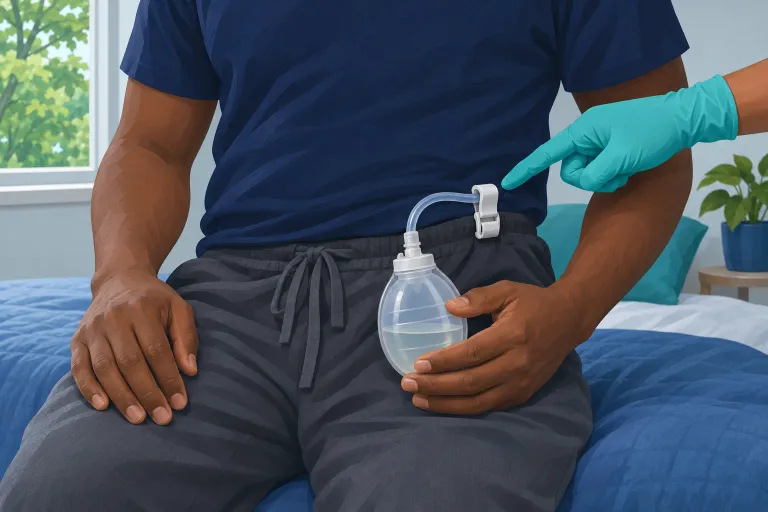
For an overseas trip, add a travel question: is removal expected before departure, and what happens if the drain needs to stay longer? Ask the team for its removal criteria and appointment arrangements.
One 2024 systematic review by Liao and colleagues examined 20 articles on techniques to reduce seroma, a collection of fluid after surgery. It compared several surgical approaches, including alternatives to two drains alone, and found lower seroma occurrence with alternative techniques in its pooled analysis.
Ask your surgeon which technique they plan to use and why it fits your operation.
Aftercare: garments, walking, incision care, and follow-up
The ASPS recovery blog says the clinical team teaches incision and drain care. It also describes movement as instructed to help prevent blood clots and wearing an abdominal support garment for the recommended time.
The NHS says a corset or tummy-control pants are usually worn for six weeks. It says you will probably be asked to attend a follow-up appointment after a few weeks to check wound healing.
Ask for written instructions on garment wear, dressing changes and showering. Also ask when you can lift, drive and return to exercise, and whether any of those decisions require an examination first.
Ask which medicines you should take, for how long, and whom to contact about a missed dose or a concern. Bring questions about your existing medicines to the consultation rather than choosing a postoperative schedule from a general timeline.
The ASPS blog advises arranging help during at least the first day or two at home. If you will recover in accommodation in Thailand, ask who will provide that help and whether they can assist with the tasks your team expects.
Tummy tuck risks and factors that can raise them
The ASPS risk list includes wound problems, blood clots and the possibility of further surgery.
| Risk or issue | What the medical sources describe |
|---|---|
| Bleeding, hematoma and infection | Cleveland Clinic lists bleeding or hematoma, meaning a collection of blood, and infection. |
| Fluid collection | BAAPS lists seroma, a collection of fluid at the operation site. |
| Delayed healing or wound separation | Cleveland Clinic lists poor wound healing and wound separation. |
| Scars, altered sensation or pain | ASPS lists unfavorable scarring, altered sensation and persistent pain. |
| Skin or fat loss | BAAPS lists skin or fat necrosis, meaning tissue death. |
| Uneven contour or further surgery | ASPS lists asymmetry, recurrent skin looseness and revision surgery. |
| Blood clots, heart or lung complications | ASPS lists deep vein thrombosis and cardiac and pulmonary complications. |
BAAPS identifies smoking, higher body mass index (BMI), diabetes, previous surgery or radiation, and medicines that affect healing as risk factors. So ask how your own health and surgical history affect the proposed operation.
One 2018 retrospective study by Dutot and colleagues reviewed 1,128 patients treated from 1990 to 2014; the abstract doesn't state the country. It reported hematoma in 5.7%, infection in 4.5%, skin necrosis in 2.7%, seroma in 2.7%, wound separation in 1.3% and deep venous thrombosis in 0.2%.
Those figures describe that study's patients. For your consultation, ask which complications your surgeon tracks and how they would be treated during your stay or after you return home.
Results, swelling, scars, and changes in weight or pregnancy
Cleveland Clinic says an early change in abdominal profile may show in one or two weeks. It says full results can take weeks or months.
The ASPS blog says swelling and bruising may take up to three months to settle completely. The NHS says scars may take 12 to 18 months to fade.

BAAPS says stable weight supports lasting results. It also says pregnancy after surgery is likely to affect the result, with a risk that skin stretch and muscle separation recur.
Ask how plans for pregnancy or a change in weight affect the timing of surgery. For questions about the appearance of a healing scar, ask what your surgeon expects to assess at each review.
Alternatives when a tummy tuck isn't the right fit
BAAPS lists diet and exercise, skin tightening for mild skin excess, and liposuction when the concern is solely fat beneath the skin. So ask whether any of these addresses the concern you want treated.
Cleveland Clinic describes panniculectomy as removing an overhanging skin apron above the pubic area for problems such as rashes, hygiene difficulties or infections. It says the operation doesn't make an incision around the belly button.
Ask the surgeon to explain which tissue they propose to treat and whether muscle repair is part of the plan. That discussion should also cover the recovery instructions for the operation being offered.
What this means when you are flying to Thailand
Ask the hospital for your total local stay and the assessment needed before flying. The NHS surgery-abroad guidance recommends no flying for 7 to 10 days after a tummy tuck because air travel and major surgery increase blood-clot risk.
Ask your surgeon when they would clear you for your journey, including the follow-up they want completed first.
Yanhee International Hospital describes its admission as "including a three-night stay" (read 29 October 2026). It also prints "a compression garment for 4 to 6 weeks" and "follow-up with stitch removal at 7 to 10 days."
Yanhee also prints "normal activity from about 2 weeks". Ask which activities that means for your operation, and how its stitch-removal appointment fits your proposed departure date.
Bumrungrad International Hospital prints "Expect to rest for at least 1-2 weeks." Its activity instruction is "Refrain from strenuous activities for at least 4-6 weeks."
For location planning, see tummy tuck surgery in Bangkok. Ask the hospital to put the postoperative stay and included follow-up in your quote when reviewing tummy tuck costs in Thailand.
The NHS says patients need rest after surgery and advises against alcohol, sunbathing, sightseeing or going in the water straight afterward. Ask what help you will need at your accommodation before planning activities there.
Clinics cannot pay to be listed or ranked higher on AsiaPatient.
Questions to put to your surgeon before booking flights
The NHS asks overseas patients to check where follow-up takes place and what happens if complications or further surgery occur. Use those questions alongside the details of your proposed operation:
Frequently asked questions
How long is tummy tuck recovery?
The NHS gives about six weeks for full recovery and effect. The ASPS recovery blog says most patients begin feeling more normal around eight weeks, with recovery varying by health, procedure type and aftercare.
How long do drains stay in after a tummy tuck?
Cleveland Clinic says drains are most often used and removed several days later. Ask your surgical team what determines removal in your case and where that appointment will happen.
When can I return to work or exercise?
The NHS gives about 4 to 6 weeks away from work and exercise. Cleveland Clinic says to severely limit strenuous exercise for 4 to 6 weeks; ask about your actual job duties and exercise before setting a return date.
What are the main tummy tuck risks?
ASPS lists bleeding, infection, fluid collection, poor wound healing, scarring, altered sensation, persistent pain and possible revision surgery. Its list also includes deep vein thrombosis and heart or lung complications; ask your surgeon how these risks apply to you.
When can I fly after a tummy tuck in Thailand?
The NHS recommends no flying for 7 to 10 days after a tummy tuck. Ask the hospital to specify your follow-up schedule and who will assess your fitness to fly before booking the return journey.
When will swelling settle and final results show?
The ASPS blog says swelling and bruising may take up to three months to settle. Cleveland Clinic gives weeks or months for full results, while the NHS describes about six weeks for full recovery and effect.
Read next
- What a tummy tuck costs in ThailandEvery published hospital and agency tummy tuck price we found, with what each includes and the date we read it.
- Extended tummy tuck in ThailandWhat an extended tummy tuck involves, who it suits, which Thai hospitals print it and what the recovery looks like.
- Mini tummy tuck: who it suits and how it differsWhat a mini tummy tuck involves compared with a full one, who it suits, recovery and risks, and which Thai hospitals print a mini price.
- Diastasis recti surgery: repair with a tummy tuck in ThailandWhat diastasis recti is, when surgery is considered, how a tummy tuck repairs it, recovery and what studies report.
Ask the Hospital How Long to Stay Before You Fly Home
Tell us the procedure, your budget and your dates, and any hospitals you are considering.
Get My Free Quote →Free, no obligation. Nothing goes to a clinic without your OK.