Liposuction Risks: Complications, Safety Limits and Flying to Thailand
Liposuction risks include bruising, swelling, uneven contours and infection; the American Society of Plastic Surgeons (ASPS) also lists rare serious complications such as pulmonary embolism and fat embolism. Before booking liposuction in Thailand, ask the surgeon about the proposed procedure, planned removal volume, treated body areas, anesthesia and follow-up.
Clinics cannot pay to be listed or ranked higher on AsiaPatient.
Is liposuction safe?
ASPS's practice advisory calls serious medical complications rare, but says their frequency increases with the number of treated sites and volume removed. Its advice asks surgeons to consider overall health, body mass index, planned volume and other procedures when choosing a technique.
Ask how your health and proposed operation affect the setting and monitoring you need.
Common side effects and complications after liposuction
The British Association of Aesthetic Plastic Surgeons (BAAPS) calls bruising very common. The NHS liposuction guide lists swelling and numbness as common effects, while ASPS's assisted-liposuction guidance describes soreness and some swelling during recovery.
For the timeline and garment guidance, see liposuction recovery in Thailand. Ask your plastic surgeon which changes should prompt a call between appointments.

Contour, fluid and wound problems
- The NHS lists lumpy or uneven results among possible complications.
- A seroma is a collection of fluid. BAAPS says it may need needle drainage or another operation and can affect the result.
- A hematoma is bleeding under the skin, listed by the NHS.
- Infection and skin necrosis: infection and death of skin tissue appear in ASPS's more severe complication list.
- Fibrosis or induration: scarring or hardening of tissue, reported in Aljerian's review, alongside changes in skin pigment.
- Persistent sensation changes and loose skin appear in the ASPS risk list.
ASPS distinguishes minor hematomas, seromas and minor contour irregularities from more severe complications.
Anesthesia, fluid and deeper-structure risks
ASPS lists adverse anesthesia reactions, lidocaine toxicity and fluid overload among more severe complications. Lidocaine is a local anesthetic; toxicity means harmful effects from the drug.
The NHS lists pulmonary edema, a buildup of fluid in the lungs, from fluid injected during liposuction. It also lists excessive bleeding and damage to internal organs.
The ASPS safety page includes injury to nerves, blood vessels, muscles, lungs or abdominal organs. Ultrasound-assisted liposuction also carries a thermal burn or heat-injury risk in that list.
Serious complications: blood clots, pulmonary embolism and fat embolism
StatPearls' clinical review identifies deep vein thrombosis (DVT), pulmonary embolism and fat embolism as serious, rare complications. DVT involves clots in the deep veins; pulmonary embolism involves blockage in the lungs.
In Kanapathy's 2021 large-volume review, the pooled pulmonary-embolism rate was 0.18% and DVT was 0.12%. The review covered 3,583 patients across 23 articles, with patient countries not stated in the abstract.
That review's most common major complication was blood loss needing transfusion, at 2.89%.
Fat embolism after liposuction
Chaghamirzayi's 2025 review describes fat embolism after aesthetic procedures, including liposuction and fat grafting, as rare but potentially fatal. It synthesizes analyses of 172 reported cases; the abstract doesn't give their countries.
Those reported cases describe complications after different aesthetic procedures.
Symptoms that need urgent medical assessment
StatPearls gives these warning signs:
- Shortness of breath with fat embolism
- Calf pain and leg swelling with DVT
- Shortness of breath and a rapid heart rate with pulmonary embolism
Seek urgent medical assessment for these symptoms after surgery.
Liposuction death rate in published studies
ASPS says severe complications rarely result in death. Kanapathy's 2021 review reported no deaths among its included studies, and Boeni's 2021 series reported no fatal complications.
Valentine's US analysis reports deaths among confirmed complications.
Why reported liposuction complication rates differ
Reported rates differ because the studies cover different operations and patient groups. For example, Kanapathy's review examines large-volume liposuction, while Boeni's series follows people treated under tumescent local anesthesia, which uses an injected local anesthetic solution.
Published complication rates
| Study and patient group | Reported complications | How to read the finding |
|---|---|---|
| Kanapathy, 2021: systematic review and meta-analysis of 23 articles, 3,583 patients; patient countries not stated in the abstract; average aspirate 7,734.90 mL | Major complications 3.35%; minor complications 11.62%; seroma 5.51%; no fat embolism or death reported | Pooled large-volume findings |
| Boeni, 2021: series of 9,002 consecutive patients treated under tumescent local anesthesia during 2003 to 2020; Swiss author affiliation, patient location not stated in the abstract | Events needing closer follow-up or intervention included seroma 0.04%, large hematoma 0.03%, deep vein thrombosis 0.01% and skin necrosis 0.01%; no fatal complications | Same surgical team; authors described the reported side effects as mainly minor |
| Valentine, 2023: cross-sectional US national analysis of 246,119 liposuction-related cases in accredited ambulatory surgery facilities | Confirmed complication rate 0.40%, or 984 patients; 13 of 21 deaths occurred in the Southeast | Facility dataset of confirmed complications |
| Gentile, 2026: prospective cohort of 1,248 patients at eight tertiary plastic-surgery centers; patient country not stated in the abstract; mean aspirated fat 3,180 mL | Overall complications 14.8%; major complications 1.9%; revision surgery 8.7% | Abdominal, flank, thigh, back or circumferential treatment; mean follow-up 52.4 months |
| Aljerian, 2024: systematic review and meta-analysis of 60 studies, 21,776 aesthetic-liposuction patients; patient countries not stated in the abstract | Overall complications 12%; contour irregularity and seroma each 2%; hematoma, surgical-site infection, fibrosis or induration, and pigmentary changes each 1% | Mostly observational studies of liposuction performed in isolation |
Ask which evidence most closely matches your proposed procedure, including whether another procedure will be added.
How much fat can be removed in one session?
ASPS's executive summary says scientific data don't establish a specific maximum volume at which liposuction becomes unsafe. It defines total aspirate as fat plus fluid.
Ask whether the volume on your treatment plan means fat alone or total aspirate. Keep that measure beside the number when discussing safety.
Volume limits and monitoring
- ASPS practice advisory (approved 2003):
For more than 5,000 cc total aspirate, it advises an acute-care hospital or an accredited or licensed facility. Overnight monitoring of vital signs and urine output is advised. ASPS executive summary. - BAAPS safety review: calls 5 L or more total aspirate large volume. It encourages limiting aesthetic liposuction to 5 L and staging treatment when more than 5 L is expected. BAAPS safety review. - BAAPS patient guidance: says no more than 3 L can safely be removed from an area. That is a per-area statement, alongside the separate total-volume guidance above. BAAPS patient page.
The ASPS patient safety page uses different wording: special considerations are needed when usually more than 5 liters of fat are suctioned. Ask the plastic surgeon which guidance and volume definition they use for your plan.
Factors that raise risk
Gentile's 2026 prospective cohort identified high body mass index (BMI), smoking, aspirate above 5 L and combined procedures as predictors of complications. It followed 1,248 patients at eight centers; patient country wasn't stated in the abstract.
Rohrich's 2025 retrospective series covered 42,720 outpatient plastic-surgery cases from 1995 to 2023, with patient country not stated in the abstract. Combined procedures and longer operating time predicted blood-clot complications and hospital admission in that broader surgical population.
Rohrich's authors say postoperative monitoring should be considered for high-risk patients, particularly with BMI above 26 kg/m², operations over 3 hours or aspirate above 3 liters. They also highlight combined procedures, especially abdominoplasty, or tummy tuck. Rohrich study.
StatPearls includes high-risk existing medical conditions among reasons for overnight observation. Its prevention measures include medical clearance, medication review, early postoperative walking and clot-prevention measures chosen by the clinical team.
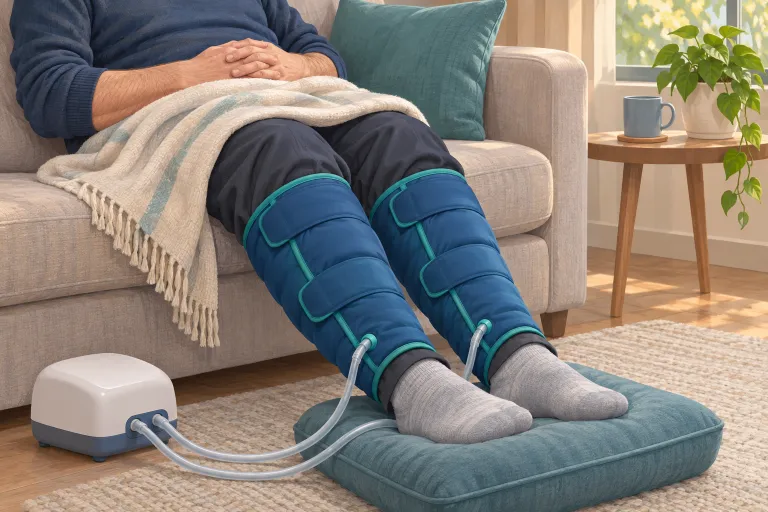
Ask about compression devices for clot prevention and whether preventive medication is appropriate. ASPS recommends intermittent pneumatic compression devices during surgery, particularly for patients at moderate or high clot risk.
High-volume treatment might need separate stages.
ASPS says high-volume treatment might be best done in separate stages. For Lipo 360 in Thailand, ask the surgeon to mark every planned body area and identify any added operation before discussing volume and monitoring.
Flying to Thailand for liposuction: what to arrange before booking
The NHS says air travel and major surgery increase blood-clot risk. It recommends not flying for 5 to 7 days after liposuction.
Yanhee Hospital says, "Plan 7 to 10 days for post-surgical follow-up and stitch removal." Its advice is to remain near Bangkok.
Phuket Plastic Surgery Institute (PPSI) prints "Hospital Admission 1-2 Nights" for liposuction, read 4 November 2026. Hospital admission, local follow-up and flying advice describe different parts of the trip.
Ask your surgeon when you can fly and which appointments should happen first.
Complications reported after surgery abroad
Alkaelani's 2023 systematic review identified 589 people with complications after cosmetic procedures abroad across 44 studies. Patient countries weren't given in the abstract, and the sample consists of people who presented with complications.
Hery's 2024 retrospective series examined 41 adults seen by one health system within a year of destination surgery. Hospitalization was deemed necessary for 28; patient country wasn't given in the abstract.
These are samples of people seeking care after destination surgery.
Questions to have answered in writing
The NHS advises arranging where checkups will happen and asking what happens if complications or further surgery occur. Use those questions alongside the ASPS volume and monitoring advice:
Use the liposuction cost guide to check the care included in a quote. Ask who will arrange and pay for treatment if a problem arises after you return home.
In this section: liposuction in Thailand, liposuction in Bangkok, chin and neck liposuction, compression garments liposuction, what liposuction costs in Thailand, Lipo 360, liposuction recovery, types liposuction, VASER liposuction, vs coolsculpting liposuction and liposuction vs tummy tuck.
Frequently asked questions
Is liposuction safe?
ASPS calls serious medical complications rare, with frequency increasing as volume and treated sites increase. Ask the surgeon to assess your health and full surgical plan before deciding.
What are the most common liposuction complications?
BAAPS calls bruising very common. In Aljerian's 2024 review of 60 studies and 21,776 aesthetic-liposuction patients, contour irregularity and seroma each occurred at a pooled rate of 2%; in Kanapathy's 2021 large-volume review seroma was the most common minor complication, at 5.51%. Patient countries weren't stated in either abstract.
What are the warning signs after liposuction?
StatPearls associates shortness of breath with fat embolism, calf pain and leg swelling with DVT, and breathlessness with a rapid heart rate with pulmonary embolism. Seek urgent medical assessment for these symptoms after surgery.
What is the liposuction death rate?
Boeni's 2021 series reported no fatal complications among 9,002 patients treated under tumescent local anesthesia. The authors had a Swiss affiliation, but patient location wasn't stated in the abstract.
How much fat can be removed safely in one session?
ASPS says there isn't a scientifically established specific maximum. BAAPS patient guidance says no more than 3 L from an area, while its BAAPS safety review encourages a 5 L aesthetic-surgery limit and staging above that.
How long should I stay in Thailand before flying after liposuction?
The NHS recommends no flying for 5 to 7 days after liposuction. Yanhee advises 7 to 10 days locally for follow-up, while PPSI lists 1 to 2 hospital nights.
Ask your operating surgeon to confirm your local stay, follow-up appointments and flight plan in writing.
Read next
- Fibrosis After Liposuction: Hard Areas and MassageWhat fibrosis after liposuction can mean, what studies report on how common it is, what is known about massage and when to contact the surgeon.
- Arm Liposuction: Who It May Suit and When an Arm Lift FitsWhat arm liposuction can change, when loose skin points to an arm lift instead, what Thai hospitals print for it and what recovery involves.
- Thigh Liposuction: Treatment Areas, Recovery and LimitsWhich thigh areas liposuction can treat, why skin elasticity limits it, how Thai sellers print per-area prices, and what to expect from recovery.
- Abdominal Liposuction: Who It May Suit and RecoveryWhat abdominal liposuction can and cannot treat, how upper, lower and whole abdomen quotes differ, what Thai sellers print, and what recovery involves.
Ask a Thai Surgeon How They Keep Liposuction Risks Down, in Writing
Tell us the procedure, your budget and your dates, and any hospitals you are considering.
Get My Free Quote →Free, no obligation. Nothing goes to a clinic without your OK.