Fibrosis After Liposuction: Hard Areas, Massage and When to Contact the Surgeon
If you recently had surgery and have a new, worsening or worrying hard area, contact your operating team before trying massage or another treatment.
The UK National Health Service (NHS) says you should contact the clinic as soon as possible about severe pain or unexpected symptoms.
Ask the surgeon what the area might be and how to assess it. If you're still planning liposuction in Thailand, ask who will handle this kind of concern after surgery and after you return home.
Clinics cannot pay to be listed or ranked higher on AsiaPatient.
What can hard or uneven areas after liposuction mean?
Describe the area to the operating team without deciding that it is fibrosis. Tell them where it is, when you noticed it and whether it has changed, then ask whether they need to examine you.
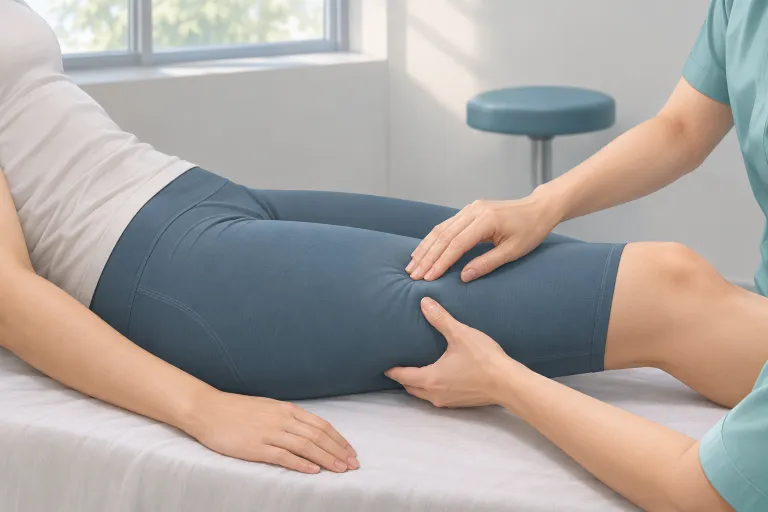
Mera-Cruz and colleagues' 2024 study describes findings in people undergoing secondary liposculpture, meaning another body-contouring procedure after previous surgery. That selected group is different from someone noticing a hard area after their first operation.
Ask a direct question: "What do you think is causing this area, and what would you need to check before calling it fibrosis?" If someone has already used that label, ask whether it came from the surgeon's assessment and what follow-up they advised.
When to contact the operating team
Contact the team about a new, worsening or worrying area before arranging treatment for it.
Ask how soon they want to review you and what to do if the area changes while you wait. For the broader warning-sign guidance, see liposuction risks.
Keep the request concrete: "I had liposuction on this date, this area feels different, and this is how it has changed. Do you want to see me, and how soon?"
What the secondary-liposculpture study observed
In one prospective series, Mera-Cruz and colleagues (2024) evaluated 74 female patients undergoing secondary liposculpture.
In that group, the authors reported depressions in 99%, soft nodules in 95% and hard nodules in 81%. They also recorded adhesions in 47% and cutaneous bursas in 4% in the same study.
These percentages describe findings among patients already having secondary surgery. They aren't rates after first-time liposuction, a personal forecast, or Thailand-specific or body-area-specific rates.
Ask your surgeon to explain any clinical term they use about your own assessment. The study's list of findings shouldn't become a checklist for naming a lump yourself.
How often was fibrosis reported in the available studies?
The two studies use different patient populations and outcome labels. Neither result is a personal forecast, a Thailand-specific rate, or a rate for the arms, thighs, abdomen or chin alone.
| Study | Design | Population and setting | Fibrosis-related result | How to read it |
|---|---|---|---|---|
| Gentile, 2026 | Prospective multicenter cohort | 1,248 patients having abdominal, flank, thigh, back or circumferential liposuction at eight tertiary plastic-surgery centers; country not stated in the abstract | Fibrosis: 2.3% | A result for this mixed-area study population, not an individual or Thailand-specific forecast |
| Aljerian, 2024 | Systematic literature review and meta-analysis | 60 studies representing 21,776 aesthetic-liposuction patients; countries not stated in the abstract | Fibrosis or induration: 1%, with a 95% confidence interval of 1% to 2% | A pooled result using the combined outcome label, not an individual or Thailand-specific forecast |
A prospective cohort follows a group over time; a meta-analysis combines results from included studies. Induration means tissue hardening, and the confidence interval describes uncertainty around the pooled estimate.
The two studies use different labels: Aljerian's result groups fibrosis with induration, while Gentile's is labeled fibrosis.
For your consultation, ask which evidence resembles your proposed operation and how the team will assess any hard area that develops.
Questions to take to the surgeon instead of using a study rate as a forecast
Ask for an assessment and a follow-up plan for the area you're concerned about:
- What are you checking when you examine this area?
- Does the original operation or treated body area change your advice?
- Does the stage of healing change when you want to review me?
- What changes should prompt me to contact you before that review?
- What would make you consider treatment, and what would you want to assess first?
If you're asking before surgery, request the team's process for handling hard or uneven areas afterward. Ask who makes the clinical decision and how you can reach that person.
What does the evidence say about lymphatic massage after liposuction?
Me Clinic's Melbourne guide presents manual lymphatic drainage as part of its postoperative approach. The same clinic says evidence in liposuction patients is insufficient for strong conclusions from randomized trials alone.
Ask what the proposed massage is intended to address in your case. If someone describes it as a cure for fibrosis, ask your surgeon what evidence supports that claim and whether it applies to the area they have assessed.
Ask before booking or starting massage
Ask the operating team whether they want to assess the area before you book massage.
Use these questions to get a case-specific answer:
- Is massage appropriate for the area you're assessing?
- What is the intended benefit, and how would you judge whether it helps?
- Who should carry it out, and what instructions should they receive from you?
- What symptoms should change the plan or prompt another assessment?
If you've already started massage, tell the surgeon what was done and how the area felt afterward. Ask whether to continue, change or pause the plan while they assess your concern.
What can compression garments do, and what remains uncertain?
Ormseth and colleagues' 2023 practical literature review assessed postoperative compression across several plastic-surgery procedures.
Its best-supported uses were reducing swelling and bruising after nose surgery, and reducing pain after breast and abdominal procedures. The review reported no demonstrated effect on seroma rate, meaning the rate of fluid collections.
Ask your surgeon what purpose compression serves in your own plan, and what evidence they use when discussing fibrosis specifically.
For garment questions and the surgeon-directed plan, see compression garments after liposuction. If a hard area has appeared, ask whether your current instructions need review before changing the garment or how you wear it.
If you had liposuction in Thailand, how should you plan follow-up?
Start with the team that performed the operation, including if you've already left Thailand. Ask how they want to assess the concern from your current location and whether you need an examination locally.
Request clear answers about contact and review:
- Who should I contact about this area, including outside normal clinic hours?
- Do you want photographs, a remote discussion or an in-person assessment?
- Which changes need urgent assessment, and where should I seek it?
- What do you want checked before any local massage or other treatment?
If you're still in Thailand, ask whether the concern changes your planned appointments or departure. If you're already home, ask how a local clinician can share findings with the operating surgeon.
Use the liposuction recovery guide for general recovery and travel planning. Ask the surgeon directly whether your current symptoms affect travel and which reviews they want completed before departure.
Frequently asked questions
What is fibrosis after liposuction?
Fibrosis is a complication reported in Gentile's liposuction study. In Mera-Cruz's secondary-liposculpture series, the authors describe fibrosis alongside findings such as hard nodules and depressions.
If a clinician uses the term about you, ask what they found on assessment and what it means for your follow-up.
Are lumps or hard spots after lipo always fibrosis?
Ask the operating team to identify the cause of your particular area. Describe any new or worsening change before starting massage or another treatment, and ask whether an examination is needed.
How common is fibrosis after liposuction?
Gentile's 2026 prospective multicenter cohort reported fibrosis in 2.3% of 1,248 patients having abdominal, flank, thigh, back or circumferential liposuction. The country isn't stated in the abstract.
Aljerian's 2024 systematic review and meta-analysis included 60 studies and 21,776 aesthetic-liposuction patients. It reported fibrosis or induration at 1%, with a 95% confidence interval of 1% to 2%; the abstract doesn't state the populations' countries.
Neither figure is a personal forecast, a Thailand-specific rate or a rate for one body area.
Does lymphatic massage after liposuction treat fibrosis?
Me Clinic's Melbourne guide says randomized-trial evidence is insufficient for strong conclusions about manual lymphatic drainage in liposuction patients. Ask your surgeon whether it is appropriate for the assessed area and what benefit they expect.
Does compression prevent fibrosis after liposuction?
Ormseth's 2023 review identifies its strongest support for other outcomes, including swelling and bruising after nose surgery and pain after breast and abdominal procedures. Ask your surgeon about evidence for fibrosis prevention and the purpose of your prescribed garment.
When should I contact my surgeon about hard areas after liposuction?
Contact the operating team about a new, worsening or worrying area before trying massage or another treatment. The NHS advises contacting the clinic as soon as possible for severe pain or unexpected symptoms.
Read next
- Arm Liposuction: Who It May Suit and When an Arm Lift FitsWhat arm liposuction can change, when loose skin points to an arm lift instead, what Thai hospitals print for it and what recovery involves.
- Thigh Liposuction: Treatment Areas, Recovery and LimitsWhich thigh areas liposuction can treat, why skin elasticity limits it, how Thai sellers print per-area prices, and what to expect from recovery.
- Abdominal Liposuction: Who It May Suit and RecoveryWhat abdominal liposuction can and cannot treat, how upper, lower and whole abdomen quotes differ, what Thai sellers print, and what recovery involves.
- What liposuction costs in ThailandEvery published hospital and agency liposuction price we found, by area, with what each includes and the date we read it.
Ask How a Surgeon Would Follow Up Hard Areas After Liposuction
Tell us the procedure, your budget and your dates, and any hospitals you are considering.
Get My Free Quote →Free, no obligation. Nothing goes to a clinic without your OK.