Liposuction Recovery: Timeline, Risks and Flying Home From Thailand (2026)
The UK's National Health Service (NHS) describes recovery in stages, with gentle exercise around three to four weeks and settling taking up to six months. In Bangkok, Yanhee prints one hospital night and seven to 10 days near the city, while NHS travel advice says not to fly for five to seven days after liposuction.
If you're considering liposuction in Thailand, ask the surgeon to put the follow-up schedule beside your proposed flight date. These timelines are general information, not personal clearance to fly, work or exercise.
Clinics cannot pay to be listed or ranked higher on AsiaPatient.
A liposuction recovery timeline, from surgery day to final settling
The NHS says return to work depends on your job and how much of your body was treated. The British Association of Aesthetic Plastic Surgeons (BAAPS) says more extensive liposuction may need longer.
Ask your surgeon which milestones apply to the areas you're having treated and which activities need a separate review.
| Stage | What the source says | Question for your surgeon |
|---|---|---|
| Surgery day and first few days | BAAPS describes getting out of bed on surgery day, then resting for a few days. NHS says walking and general movement should be fine, with no strenuous activity in the first couple of weeks. | What movement do you want me to do after discharge? |
| Around one week | NHS places stitch removal at about one week. | Will my stitches need removal, and where will that happen? |
| Returning to work | The American Society of Plastic Surgeons (ASPS) says most people return within a few days after laser- or ultrasound-assisted liposuction. BAAPS limits its within-days guidance to small-volume cases. | How much time off fits my operation and job? |
| Weeks three to four | NHS places gentle exercise around three to four weeks. BAAPS uses the same interval for normal exercise. | Which exercises can I resume, and at what intensity? |
| Weeks 10 to 12 | NHS and BAAPS advise avoiding strenuous activity for 10 to 12 weeks. | When should you review me before strenuous activity? |
| Later settling | NHS says the treated area can take up to six months to settle completely. | When will you assess the result? |
A 2013 report by Dixit and Wagh describes one practice's experience with more than 600 suction-assisted liposuction cases in India from January 2007 through December 2012. It describes tissue generally feeling normally soft and flexible.
The Dixit and Wagh description concerns how the tissue feels. The NHS six-month line concerns complete settling of the treated area, so keep those endpoints separate when discussing progress.
Compression garments after liposuction: what the sources say
BAAPS says compression garments reduce swelling and help the body adapt to its new shape.
| Source | Published compression instructions |
|---|---|
| NHS | Wear an elasticated support corset or compression bandages constantly for several weeks, removing them to shower. |
| BAAPS | Wear the garment through the day and overnight for at least two weeks, taking it off for showers. Continue daytime wear for another four to six weeks. |
| Dixit and Wagh's 2013 Indian practice report | Describes compression started immediately and continued for four to six weeks to control expected swelling. |
So ask the treating surgeon for written instructions on fit, hours of wear and removal. Which garment will you receive, who checks its fit, and when should you ask for it to be reviewed?
So use the schedule your surgeon gives you. If it differs from the published guidance, ask what about your operation changes the plan.
Swelling, bruising, numbness and when results settle
The NHS says bruising and swelling may last up to six months. It says numbness should go away in six to eight weeks, while also listing persistent numbness among possible complications. So ask when persistent numbness needs assessment.
Dixit and Wagh's report describes swelling increasing during the first 10 to 14 days, then beginning to soften around four weeks. It describes consistently softer tissue at six to eight weeks and generally normally flexible tissue by three months.
The same Indian practice report describes bruising peaking at seven to 10 days and generally disappearing within two to four weeks.
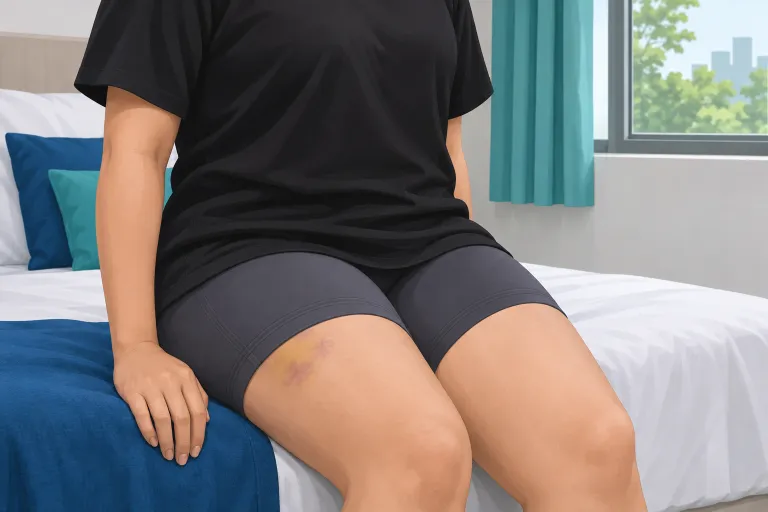
ASPS's assisted-liposuction guidance says skin firming may continue for up to six months. Cleveland Clinic's liposculpture page also says the full outcome can take up to six months.
Cleveland Clinic describes liposculpture as adding definition to smaller areas, while liposuction removes larger amounts of fat.
For longer-term results, the NHS says the effect is generally long-lasting when a healthy weight is maintained. Ask when your surgeon wants to assess persistent swelling, changes in sensation or an uneven contour.
Liposuction risks: common recovery effects and complications to discuss before surgery
The NHS lists bruising, swelling and temporary numbness among common recovery effects. Its complications list also includes persistent numbness, bleeding under the skin and uneven results.
Ask your surgeon how to recognize a change that needs assessment.
- Contour and skin changes. BAAPS lists scars and sensory changes alongside asymmetry and contour irregularities. Ask how the surgeon would assess and manage an unsatisfactory result.
- Bleeding and fluid collections. The NHS lists hematoma, meaning bleeding under the skin. BAAPS describes a seroma as a fluid collection that may need needle drainage or another operation.
- Infection and deeper injury. BAAPS lists infection and damage to deeper structures. The NHS also lists internal-organ damage and allergic reactions to the anesthetic.
- Clots and embolism. StatPearls' clinical review lists deep vein thrombosis (DVT) and pulmonary embolism among rare serious complications. These are a clot in a deep vein and a clot blocking a blood vessel in the lungs.
- Assisted-technique risks. ASPS includes skin burns among the risks of laser- or ultrasound-assisted liposuction. Its list also includes bruising, infection, minimal bleeding, numbness and swelling.
StatPearls associates calf pain and leg swelling with DVT, and shortness of breath and a rapid heartbeat with pulmonary embolism. It also describes shortness of breath with fat embolism, where fat enters the circulation.
Before discharge, ask for an emergency contact and instructions on where to seek urgent care for these symptoms. Ask who will assess concerns once you're home and who will arrange any additional treatment.
Recovery in Thailand: stay near the surgical team, then plan the flight
Yanhee International Hospital's English liposuction page says its offer "includes a 1-night stay" (read 29 October 2026). Its follow-up wording is: "Plan 7 to 10 days for post-surgical follow-up and stitch removal."
The same Yanhee page tells patients to "plan to stay near Bangkok for 7 to 10 days". The admission night and the time near the hospital are separate parts of its instructions.
For liposuction in Bangkok, ask the hospital where follow-up takes place and which appointments must happen before departure. Ask whether the stay it quotes covers your planned treatment areas and any additional procedure.
The NHS overseas-surgery guidance says air travel and major surgery increase blood-clot risk. It recommends not flying for five to seven days after liposuction.
Ask the surgeon to confirm both the follow-up dates and when you can fly before you finalize the return booking.
The NHS also says to establish what happens if complications occur, where follow-up appointments will be and what further surgery would cost. So ask how those arrangements would work if your departure needs to change.
Questions to settle before you book travel
The NHS's overseas-aftercare questions cover check-ups, complications and further treatment costs. Add questions about your own operation before committing to travel:
When reviewing a quote, use the liposuction cost in Thailand page alongside those questions. Ask the hospital to identify which follow-up visits and garments are included in your own quote.
Where VASER and other assisted techniques fit into recovery
ASPS describes laser- or ultrasound-assisted liposuction as liquefying fat before removal. Yanhee lists tumescent and "Vaser (ultrasound-assisted)" liposuction.
ASPS describes soreness and some swelling for a few days after assisted liposuction, and says a clinician may advise a compression garment. ASPS also says most people return to work within a few days after these techniques.
For VASER liposuction in Thailand, ask the surgeon what the technique changes about your aftercare. Ask for the expected return-to-work plan and restrictions for the areas being treated.
Frequently asked questions
How long is liposuction recovery?
BAAPS describes movement on surgery day and a return to work within days for small-volume cases. The NHS places gentle exercise around three to four weeks, advises avoiding strenuous activity for 10 to 12 weeks, and says complete settling can take up to six months.
How long should I wear a compression garment after liposuction?
The NHS says constantly for several weeks, except showering. BAAPS gives at least two weeks of day-and-night wear, then another four to six weeks during the day.
Dixit and Wagh's 2013 Indian practice report describes four to six weeks of immediate postoperative compression. Ask your surgeon which schedule applies to your treatment and when to have the fit checked.
When can I fly after liposuction?
The NHS recommends not flying for five to seven days after liposuction. Yanhee tells patients to plan seven to 10 days near Bangkok for follow-up and stitch removal, so ask your treating surgeon to confirm the flight date against your appointments.
When can I return to work after liposuction?
ASPS's assisted-technique guidance says most people return within a few days. BAAPS says small-volume cases may do so, but more extensive treatment may need longer.
Return timing varies, says the NHS. It depends on your job and how much of your body was treated, so describe your work duties before agreeing on leave.
When can I exercise after liposuction?
The NHS places gentle exercise around three to four weeks, while BAAPS uses that interval for normal exercise. Both advise avoiding strenuous activity for 10 to 12 weeks.
What are the risks of liposuction?
The NHS lists uneven results, hematoma, persistent numbness, infection, blood clots, pulmonary embolism, internal-organ damage and anesthetic allergic reactions. BAAPS also describes fluid collections that may need drainage or another operation.
Use the risks section above to prepare for the consultation. Ask the surgeon how your health and planned operation affect each risk, and how a complication would be treated.
Read next
- What liposuction costs in ThailandEvery published hospital and agency liposuction price we found, by area, with what each includes and the date we read it.
- Chin liposuction cost: Thailand beside the US, UK and AustraliaWhat Thai hospitals print for chin and neck liposuction, what US, UK and Australian sources give, and what each price covers.
- VASER liposuction in ThailandWhat VASER liposuction is, which Thai hospitals print a VASER price, and how it differs from tumescent liposuction.
- Liposuction vs tummy tuck: which one fitsWhat each operation removes or repairs, who suits which, doing both together, and the recovery and risks of each side by side.
Ask How Long to Wear the Garment and When You Can Fly
Tell us the procedure, your budget and your dates, and any hospitals you are considering.
Get My Free Quote →Free, no obligation. Nothing goes to a clinic without your OK.