Liposuction areas: body map and candidacy limits
Cleveland Clinic lists the chin and neck, hips, abdomen, inner and outer thighs, knees, ankles and buttocks as the areas most commonly treated with liposuction. Bangkok Hospital includes upper arms in its examples.
If you're considering liposuction in Thailand, bring the areas you want assessed to the consultation. Ask the surgeon to mark the proposed treatment boundaries and explain which changes are realistic for you.
Clinics cannot pay to be listed or ranked higher on AsiaPatient.
Which areas can liposuction treat?
Cleveland Clinic names the chin and neck, hips, abdomen, inner and outer thighs, knees, ankles and buttocks as the areas most commonly treated. Bangkok Hospital also includes "upper arms" in its description of treatment areas.
Tell the surgeon which areas you want assessed, then ask for a recommendation based on your own anatomy before choosing an operation.
| Area or area group | Named by | What the source says | Question for the surgeon |
|---|---|---|---|
| Chin and neck | Cleveland Clinic | Both are commonly treated areas | Which part of my chin or neck would you treat? |
| Abdomen and hips | Cleveland Clinic | Both appear in its treatment-area list | Where would treatment begin and end? |
| Thighs, knees and ankles | Cleveland Clinic | It names inner and outer thighs, knees and ankles | Which of these areas, if any, suit my goals? |
| Buttocks | Cleveland Clinic | The buttocks are included among commonly treated areas | What change would fat removal make here? |
| Upper arms | Bangkok Hospital | Its liposuction description includes upper arms | Is my concern mainly fat, loose skin or both? |
Chin and neck
Cleveland Clinic lists both the chin and neck as common treatment areas. Ask the surgeon to point out the area they would assess for fat removal and discuss the skin over it.
Describe the change you're considering without assuming the whole neck needs treatment. For more focused consultation questions, see chin and neck liposuction.
Abdomen and hips
The abdomen and hips are both named in Cleveland Clinic's liposuction guidance. The same source describes fat removal as a way to change body contour and says it isn't an alternative to weight loss.
Ask the surgeon to identify the fat they propose to remove and discuss any loose skin separately. If loose abdominal skin is your main concern, use the liposuction versus tummy tuck guide to prepare questions about the options.
Inner and outer thighs, knees and ankles
Cleveland Clinic names inner and outer thighs separately, along with knees and ankles. Point to the part of your leg you want assessed so the consultation addresses that area.
Ask whether fat removal would address the change you want. Request an explanation of the skin assessment for each proposed area, including any reason the surgeon would advise leaving an area untreated.
Buttocks, upper arms and other areas named by Bangkok Hospital
Bangkok Hospital lists "abdomen, upper arms, buttocks, hips, thighs and neck" as examples. Ask a surgeon which, if any, apply to your plan.
For upper arms, an article from the ASPS quotes a surgeon saying patients with minimal skin excess and good skin quality often do well with liposuction alone or liposuction combined with a skin tightening treatment. The same surgeon says that with significant laxity or excess skin, liposuction alone will not address the problem.
Ask what the surgeon expects fat removal to change and what would remain. Keep any discussion of additional treatment attached to your own examination and goals.
Could liposuction suit the area you want treated?
Cleveland Clinic describes its best candidate as someone of average or slightly above-average weight, in good health, with localized fat that doesn't respond well to diet and exercise. Use that description to discuss candidacy with the surgeon.
Liposuction might not suit the change you have in mind. Cleveland Clinic says it isn't an effective treatment for cellulite or loose, sagging skin.
Cellulite is the dimpled skin that Cleveland Clinic describes as typically appearing on the thighs, hips and buttocks. Ask whether the change you want concerns a localized fat deposit, the skin's surface or excess skin.
Because liposuction removes no skin, Cleveland Clinic says the surgeon relies on skin contraction or elasticity, meaning the skin's ability to spring back, to maintain its shape. Ask how the surgeon expects your skin to respond in each area.
Tell the surgeon what you want to change in each area and ask what liposuction could realistically address. Bring up previous liposuction, if you've had it, and ask how it affects the assessment.
Ask for an explanation of suitability for every proposed area.
Ask whether the surgeon expects the skin to adapt after fat removal and whether they advise against treating any area you've identified. Ask what findings led to their recommendation and what alternatives you could discuss.
What happens when an area is treated?
Bangkok Hospital says its plastic surgeon marks circles and lines on the treatment areas before surgery. It describes cuts measuring 0.5 to 1 cm and a thin tube, called a cannula, measuring 2 to 5 mm in diameter.
Cleveland Clinic describes a small cut in the skin, called an incision, near the targeted fat after fluid has been injected. A cannula connected to suction removes fat through that access.
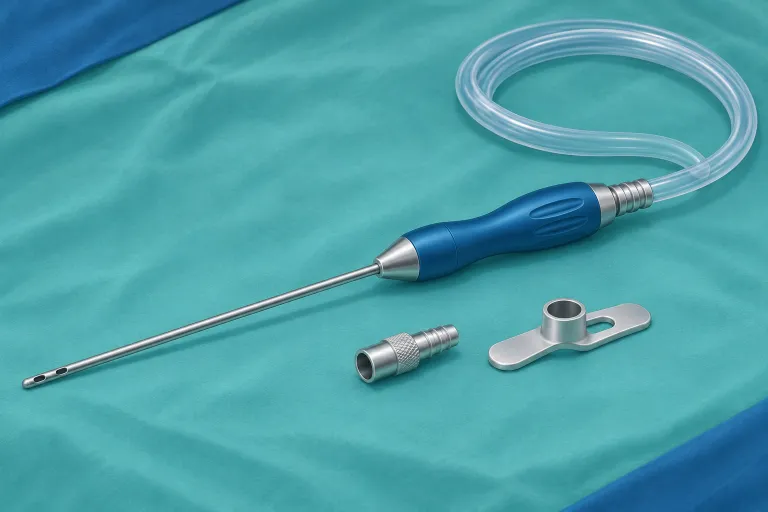
Ask where your incisions would sit and which areas each would serve. Request an explanation of the proposed technique in ordinary language, including why the surgeon considers it appropriate for you.
The guide to liposuction types covers technique questions in more detail. Keep the area you want assessed and the proposed method together when discussing the surgical plan.
Can several liposuction areas be treated in one operation?
Ask your surgeon which areas could be treated together in your case.
Bangkok Hospital says technique selection depends on the patient's treatment goals, the area of fat to be removed and any previous liposuction. Ask how those considerations affect your proposed operation.
Request a written plan that identifies each area. If the surgeon proposes separate operations, ask about the sequence and the assessment before any later treatment.
Ask the surgeon to explain the plan for all proposed areas together. Get any changes to that plan explained before you agree to surgery.
What recovery and possible problems should you discuss before choosing areas?
Cleveland Clinic says most people can return to work within a few days and to normal activities within about two weeks. It says outcomes vary with the amount of fat removed and the area treated.
Ask what those activity descriptions mean for your job and daily routine. Request instructions for the full operation, including when the surgeon wants to review healing.
Bangkok Hospital says pain, swelling and bruising around the surgical area might occur during the first 24 to 48 hours. Ask your team what to expect and which symptoms should prompt you to contact them.
Use the liposuction recovery guide to prepare questions about activity and follow-up. For garment questions, see compression garments after liposuction and ask for instructions covering your planned areas.
One systematic review and meta-analysis by Aljerian and colleagues, published in a 2024 journal issue, which combines results from multiple studies, included 60 studies representing 21,776 patients undergoing aesthetic liposuction performed in isolation. It reported an overall complication rate of 12%, with a 95% confidence interval of 8% to 16%.
Those are pooled findings for the studied cosmetic-liposuction patients.
Ask the surgeon how they assess the risks of your complete operation and how they would manage complications. The liposuction risks guide covers that discussion in more detail.
Frequently asked questions
What areas can be liposuctioned?
Cleveland Clinic lists the chin and neck, hips, abdomen, inner and outer thighs, knees, ankles and buttocks. Bangkok Hospital also names upper arms.
Can liposuction treat the chin and neck?
Yes, both appear in Cleveland Clinic's list of commonly treated areas. Ask the surgeon whether fat removal would address your concern and where they would treat.
Can liposuction treat loose skin or cellulite?
Cleveland Clinic says liposuction isn't an effective treatment for cellulite or loose, sagging skin. Ask the surgeon to explain the options for the concern you've identified.
What makes someone a possible liposuction candidate?
Cleveland Clinic describes good health, average or slightly above-average weight and localized fat resistant to diet and exercise. Ask for an assessment of your health and each area you're considering.
What happens at the treatment area during liposuction?
Cleveland Clinic describes a small incision near the targeted fat and removal with a cannula attached to suction. Ask your surgeon to explain the planned access for your areas.
How do I find out how many areas can be treated in one operation?
Ask your surgeon for an individual plan identifying the areas they propose to treat together. Request the reasons for that combination and the recovery and follow-up arrangements before agreeing to it.
Read next
- Liposuction in BangkokWhich Bangkok hospitals and clinics print a liposuction price, where they are and what the stay looks like.
- Liposuction recovery: garments, risks and the trip homeWeek by week after liposuction: compression garment, swelling, return to work and exercise, the main risks, and what Thai hospitals print about stay.
- Compression garments after liposuction: how long and which kindHow long to wear a compression garment after liposuction, which kind, what studies show about swelling and results, and what Thai hospitals say.
- Liposuction risks, and how to lower them when you fly inLiposuction risks with study rates, volume limits sources set, blood clot and flying advice, and what to check when surgery is abroad.
Ask a Surgeon Which Areas Suit Your Plan
Tell us the procedure, your budget and your dates, and any hospitals you are considering.
Get My Free Quote →Free, no obligation. Nothing goes to a clinic without your OK.