Hair Transplant Risks: Understanding and Minimizing Complications
Part of our comprehensive hair transplant guide, this section covers the potential risks and complications you should know about. Hair transplants are generally safe, with serious complications occurring in less than 2-3% of cases. But "safe" doesn't mean risk-free. Understanding potential complications, from minor and temporary (swelling, itching) to rare but serious (infection, necrosis), helps you make an informed decision and recognize warning signs early.
This guide covers every risk category, how to prevent problems, and what to do if complications occur.
Risk Categories
Common and Temporary (Affect 50-80% of patients)
- Swelling
- Itching
- Scabbing
- Temporary shock loss
- Minor bleeding
Less Common but Manageable (5-20% of patients)
- Infection
- Folliculitis (inflamed follicles)
- Cyst formation
- Poor graft survival in specific areas
- Numbness (prolonged)
Rare but Serious (Less than 1%)
- Skin necrosis (tissue death)
- Severe infection/abscess
- Permanent shock loss
- Keloid/hypertrophic scarring
- Nerve damage
Common Temporary Risks
Swelling (60-80% of patients)
What happens:
- Fluid accumulation in forehead, sometimes around eyes
- Peaks day 2-3, resolves by day 7
Why it happens:
- Normal inflammatory response to surgery
- Gravity pulls fluid down from scalp
Prevention:
- Sleep elevated (45-degree angle)
- Ice packs on forehead (NOT on grafts)
- Anti-inflammatory medication
Warning signs:
- Swelling increasing after day 3 (may indicate infection)
- Severe eye swelling preventing vision
Itching (50-70% of patients)
What happens:
- Intense itching in transplanted and donor areas
- Peaks days 5-10
Why it happens:
- Healing process
- New hair follicles activating
Prevention/Management:
- Antihistamines (Benadryl, Zyrtec)
- Resist scratching (can dislodge grafts)
- Gentle tapping instead of scratching
- Moisturizing spray (provided by clinic)
Not normal:
- Itching with increasing redness/pus (suggests infection)
Scabbing (100% of patients)
What happens:
- Small scabs form around each graft
- Shed naturally days 7-14
Prevention:
- Gentle washing starting day 2-3
- Don't pick at scabs
- Let them fall off naturally
Complications:
- Picking scabs can dislodge grafts
- Scabs remaining after 3 weeks may indicate poor healing
Minor Bleeding (40-60% of patients)
What happens:
- Small amount of bleeding first 24-48 hours
- Light spotting on pillow normal
Prevention:
- Avoid blood thinners before surgery
- Sleep elevated
- Don't touch grafts
Warning signs:
- Heavy bleeding continuing after day 2
- Bleeding that won't stop with gentle pressure
Temporary Shock Loss (20-40% of patients)
What happens:
- Existing (non-transplanted) hair near transplant area sheds
- Caused by surgical trauma
- Grows back within 3-6 months in most cases
Who's at risk:
- People with miniaturized (thinning) hair
- Those with DHT-sensitive hair
Prevention:
- Continue finasteride during procedure (if already taking)
- Minimize trauma during surgery
Permanent shock loss: Rare (<5%) but possible with aggressive technique
Less Common but Manageable Risks
Infection (1-3% of cases)
What happens:
- Bacterial infection in recipient or donor area
- Can occur days 3-10 post-op
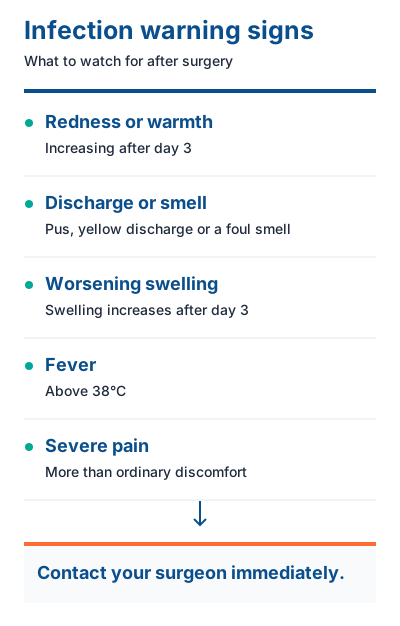
Symptoms:
- Increasing redness
- Warmth
- Pus/yellow discharge
- Fever (>100.4°F / 38°C)
- Worsening pain
Prevention:
- Prophylactic antibiotics (taken pre/post-op)
- Proper wound care
- Keep scalp clean
Treatment:
- Additional antibiotics
- Drainage if abscess forms
- Rarely requires hospitalization
Impact on grafts:
- Localized infection: May lose grafts in affected area
- Treated quickly: Usually minimal loss
Folliculitis (5-10% of patients)
What happens:
- Inflamed hair follicles
- Small pimple-like bumps around grafts
- Occurs weeks 3-8
Cause:
- Ingrown hairs
- Bacterial colonization
- Normal part of hair emerging
Treatment:
- Warm compresses
- Antibiotic ointment
- Oral antibiotics if severe
- Usually self-resolving
Not serious: Doesn't affect long-term result
Cyst Formation (2-5% of patients)
What happens:
- Small fluid-filled cysts around grafts
- Occur months 1-3
Cause:
- Grafts placed too deep
- Debris trapped beneath skin
Treatment:
- Most resolve spontaneously
- Can be drained if persistent
- Steroid injection for large cysts
Prevention:
- Proper implantation depth
- Meticulous technique
Poor Graft Survival in Specific Areas (5-10% of patients)
What happens:
- Most grafts grow, but certain patches don't
- Becomes apparent month 6-12
Causes:
- Poor blood supply in those areas
- Graft damage during extraction/implantation
- Patient-specific healing factors
Treatment:
- Touch-up procedure (mini-transplant to fill gaps)
- Many clinics offer free revision if survival <80%
- Wait until month 12-18 to assess
Prolonged Numbness (10-20% of patients)
What happens:
- Numbness in donor or recipient area lasting 3-12 months
- Rarely permanent
Cause:
- Temporary nerve trauma during surgery
- Nerves regenerate over time
FUT: More common (suturing can affect nerves)
FUE: Less common but still possible
Concerning: Numbness with weakness (extremely rare, indicates nerve damage)
Rare but Serious Risks
Skin Necrosis (Tissue Death) (<0.5% of cases)
What happens:
- Skin turns dark, dies due to lost blood supply
- Caused by overly aggressive graft packing
Risk factors:
- Smoking (reduces blood flow)
- Diabetes
- Previous scalp surgery/scarring
- Too many grafts packed too close
Prevention:
- Conservative density targets
- Quit smoking 4+ weeks before
- Experienced surgeon (knows safe limits)
Treatment:
- Immediate medical attention
- Wound care
- May require skin graft
- Permanent scarring likely
Impact: Small areas of necrosis can heal; large areas may need revision
Severe Infection/Abscess (<1% of cases)
What happens:
- Localized infection forms abscess (pus pocket)
- Requires drainage
Symptoms:
- Painful swelling
- Fluctuant mass
- Fever
- Red streaks (lymphangitis, serious)
Treatment:
- Incision and drainage
- IV antibiotics if severe
- Hospitalization rare but possible
Prevention:
- Proper sterile technique
- Prophylactic antibiotics
- Clean aftercare
Permanent Shock Loss (<5% of patients)
What happens:
- Native hair sheds and doesn't grow back
- Leaves thin, patchy appearance
Causes:
- Overly aggressive graft placement (damages native follicles)
- Poor surgical technique
- Pre-existing miniaturization (hair was dying anyway)
Risk factors:
- Advanced hair loss (existing hair already weak)
- High density packing
- Inexperienced surgeon
Treatment:
- Touch-up transplant
- Scalp micropigmentation
- Acceptance
Prevention:
- Conservative approach in areas with miniaturized hair
- Finasteride to strengthen native hair
Keloid or Hypertrophic Scarring (<2% of FUT, <0.5% of FUE)
What happens:
- Scar overgrows, becomes raised, thick, and dark
- More common with FUT linear scar
Risk factors:
- Personal or family history of keloids
- Certain ethnicities (African, Asian descent more prone)
- Chest/shoulder keloids in past
Prevention:
- Tell surgeon if you have keloid history
- Consider FUE instead of FUT
- May not be a candidate if severe tendency
Treatment:
- Steroid injections
- Silicone sheets
- Laser therapy
- Surgical scar revision (risky: can make worse)
Nerve Damage (<0.5% of cases)
What happens:
- Permanent numbness or altered sensation
- Very rare with modern techniques
Symptoms:
- Persistent numbness beyond 12 months
- Burning or tingling that worsens
- Weakness (extremely rare)
Prevention:
- Experienced surgeon
- Proper depth control
Treatment:
- Usually no effective treatment
- Sensation may partially return over years
Medical Tourism-Specific Risks
Complications from traveling for surgery:
- Limited follow-up access
- Variable regulations
- Higher complication rates in "hair mills"
Mitigation:
- Choose JCI-accredited facilities
- Verify surgeon credentials
- Stay 7-10 days minimum
- Have local follow-up arranged before traveling
Warning Signs: When to Contact Your Surgeon
Immediate (within 24 hours):
- Heavy bleeding that won't stop
- Severe pain (>7/10) not controlled by medication
- Signs of allergic reaction (difficulty breathing, widespread rash)
- Fever >102°F (39°C)
Within 1-3 days:
- Increasing redness/swelling after day 3
- Pus or foul-smelling discharge
- Fever >100.4°F (38°C)
- Black or dark purple skin (necrosis)
Within a week:
- Scabs not forming
- Excessive crusting/oozing
- Severe itching with redness/swelling
Month 3-6:
- No growth at all by month 6
- Severe patchy growth
- Persistent cysts
Risk Minimization Strategy
Pre-Op:
- Choose ABHRS/ISHRS certified surgeon
- Disclose all medical conditions
- Quit smoking 4+ weeks before
- Stop blood thinners as directed
- Ask about surgeon's complication rate
During Procedure:
- Verify sterile technique used
- Ask about preservation solutions
- Confirm surgeon performing key steps
Post-Op:
- Take all prescribed medications
- Follow washing instructions exactly
- Sleep elevated
- No smoking/alcohol for 2 weeks
- Attend all follow-ups
Conclusion
Most hair transplant risks are minor and temporary. Serious complications are rare (<2-3% of cases) and usually preventable with proper surgeon selection and aftercare. The single most important risk reduction: choose a qualified, experienced surgeon, not the cheapest option.
If something feels wrong during recovery, contact your surgeon immediately. Early intervention prevents most serious complications.
Next steps:
- Learn proper care: Hair Transplant Aftercare Guide
- Return to complete guide: Hair Transplant Guide