Best Age for a Hair Transplant: Timing Your Procedure
Part of our comprehensive hair transplant guide, this section explains the optimal age range for getting a hair transplant. Hair transplants can technically be performed at any age over 18, but timing significantly impacts long-term satisfaction. Operate too early and you risk creating unnatural "islands" as native hair continues receding. Wait too long and donor supply may be limited. This guide explains the optimal age ranges and factors that matter more than a specific number.
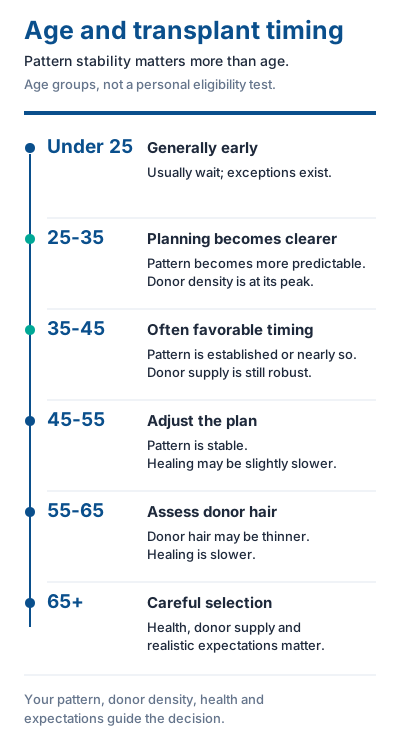
The Age Spectrum
Under 25: Generally Too Early
Consensus among ISHRS surgeons: Wait until 25+ unless exceptional circumstances
Why waiting matters:
1. Pattern not fully developed
- Male pattern baldness progresses until late 20s-early 30s
- Transplanting at 22 into areas that later bald creates "island" effect
- Requires multiple revision procedures
2. Hormonal changes
- DHT levels may still be rising
- Hair loss rate unpredictable under 25
3. Psychological factors
- Younger patients often have unrealistic expectations (want teenage hairline)
- May not commit to lifelong finasteride (needed to protect native hair)
Exceptions where early transplant makes sense:
- Stable hair loss for 3+ years (documented)
- Traction alopecia from hairstyles
- Scarring alopecia (burns, trauma)
- Congenital hairline abnormalities
Patient data:
- Under-25 patients have 35-45% revision rate (vs. 10-15% for older patients)
- Higher regret rates when performed before pattern stabilizes
25-35: The Ideal Starting Range
Why this is optimal:
1. Pattern becoming predictable
- Most men's hair loss pattern visible by 25-28
- Can plan conservative hairline that won't look odd if loss progresses
2. Donor area at peak
- Hair density maximum
- Scalp laxity good (important for FUT)
- Healing capacity optimal
3. Long life ahead to enjoy results
- 40+ years to benefit from transplant
- Better ROI on investment
4. Mature decision-making
- More realistic expectations
- Better commitment to aftercare/maintenance
Considerations at this age:
- Still need conservative hairline (age-appropriate, not teenage)
- Must commit to finasteride to protect native hair
- May need second procedure as pattern develops
Typical Norwood levels at this age: 2-4
Grafts needed: 1,500-3,000
Success rate: 90-95%
Satisfaction rate: 85-95%
35-45: The Sweet Spot
Ideal for most patients:
1. Pattern fully or nearly established
- Easy to predict final pattern
- Can design definitive hairline
2. Emotional maturity
- Realistic expectations common
- Better at following long-term maintenance
3. Donor still robust
- Adequate supply for comprehensive result
4. Professional/social benefits
- Prime career years
- Social life active
- Dating/relationships
Typical Norwood levels: 3-5
Grafts needed: 2,000-4,000
Success rate: 90-95%
Satisfaction rate: 90-95%
This is the age bracket with highest satisfaction scores.
45-55: Still Excellent Results
Advantages:
1. Pattern completely stable
- No guesswork about future loss
- Can plan comprehensive coverage
2. Age-appropriate expectations
- Don't want teenage hairline (good!)
- Understand natural limitations
3. Financial stability
- Can afford quality surgeon
- Less likely to choose based on price alone
Considerations:
- Healing slightly slower (still good)
- May want lower density (more natural for age)
- Hairline should match age (mature, not juvenile)
Typical Norwood levels: 4-6
Grafts needed: 2,500-5,000
Success rate: 88-94%
Satisfaction rate: 85-92%
55-65: Can Still Work Well
Realistic assessment:
Pros:
- Pattern definitive (easy planning)
- Often satisfied with modest improvement
- Accept age-appropriate design
Cons:
- Donor hair may be thinner
- Healing slower
- Graft survival slightly lower (85-92% vs. 90-95%)
- Fewer total grafts available
Ideal candidates in this range:
- Norwood 3-4 (not extensive baldness)
- Good donor density
- Healthy, no major medical issues
- Want subtle improvement (not dramatic transformation)
Not ideal:
- Norwood 6-7 expecting full coverage
- Thin donor hair
- Multiple medical conditions affecting healing
Typical Norwood levels: 4-6
Grafts needed: 2,000-4,000
Success rate: 85-92%
Satisfaction rate: 80-90%
65+: Possible with Right Expectations
Can work but requires careful selection:
Good candidates:
- Excellent health for age
- Realistic goals (subtle frame for face, not full restoration)
- Good donor supply
- Accept age-appropriate hairline
Poor candidates:
- Multiple health conditions
- Extensive baldness (Norwood 6-7)
- Expecting dramatic results
- Thin donor hair
Considerations:
- Healing takes longer (3-4 weeks vs. 2 weeks)
- Graft survival 80-90% typical
- May need lower density targets
- Design must match age (mature hairline)
Studies show:
- 70+ year old patients can get excellent results
- Satisfaction high when expectations appropriate
- Complication rates similar to younger patients if healthy
Factors That Matter More Than Age
Hair Loss Stability
More important than age:
Stable pattern (3+ years):
- Can proceed at 25+
- Predictable planning
- Lower revision risk
Rapidly progressing loss:
- Wait even if over 30
- Unpredictable outcome
- High revision likelihood
How to assess stability:
- Compare photos over 2-3 years
- Track with Norwood scale
- Monitor with dermatologist
Donor Hair Density
Density more critical than age:
High density (80-100 FU/cm²):
- Great candidate at any age
- Ample supply for comprehensive result
Low density (50-70 FU/cm²):
- May not be candidate even if young
- Limited grafts available
- Requires conservative approach
Testing donor density:
- Surgeon measures with calipers/dermatoscope
- Critical for estimating total grafts available
Overall Health Status
Health trumps age:
Excellent health at 60: Better candidate than unhealthy 35-year-old
Medical conditions affecting candidacy:
- Uncontrolled diabetes (poor healing)
- Autoimmune disorders (graft rejection risk)
- Blood clotting disorders
- Active scalp infections
Medications affecting surgery:
- Blood thinners (stop pre-op)
- Immunosuppressants (affect healing)
- Some blood pressure medications
Commitment to Maintenance
Critical regardless of age:
Finasteride commitment:
- Protects non-transplanted hair
- Essential for long-term satisfaction
- Lifelong medication
If unwilling to take finasteride:
- May not be good candidate at any age
- Native hair will continue thinning around transplant
- Creates patchy, unnatural appearance
Age-based considerations:
- Younger patients: Must commit for decades
- Older patients (60+): May not need finasteride (pattern complete)
Age-Specific Design Considerations
Teenage/Early 20s Hairline (Aggressive)
- Low, straight across
- Sharp corners
- High density
Problems:
- Looks unnatural on older face
- Uses too many grafts
- Requires revisions as age
Mature Hairline (Appropriate for 30+)
- Slight recession at temples (1-2cm from juvenile line)
- Softly curved
- Age-appropriate density
Advantages:
- Looks natural at any age
- Conserves grafts
- Won't need revisions
Senior Hairline (60+ appropriate)
- More recession acceptable
- Softer density
- Frames face without looking "pluggy"
Key: Match hairline to age, not to teenage photos
Common Age-Related Mistakes
Too Young: The "Island" Effect
What happens:
- 22-year-old gets hairline transplant
- Hair behind hairline continues receding
- By 30, has "island" of transplanted hair with bald area behind
- Looks unnatural
- Needs expensive revision
Too Old Without Adjusting Expectations
What happens:
- 68-year-old Norwood 6 expects full teenage density
- Limited donor supply can't achieve it
- Disappointed with realistic result
- Should have accepted age-appropriate modest improvement
Wrong Hairline for Age
What happens:
- 45-year-old insists on 18-year-old hairline
- Looks like bad toupee
- Regrets at 50 when it looks increasingly odd
The Role of Finasteride
Age affects finasteride considerations:
Under 40:
- Finasteride nearly mandatory
- Hair loss often still progressing
- Protects transplant investment
40-55:
- Highly recommended
- Loss may be slowing but not stopped
- Preserves native hair around grafts
55+:
- Optional
- Pattern often stable
- Benefits may be marginal
Making the Decision at Your Age
Ask yourself:
If under 30:
- Has my hair loss been stable for 3+ years?
- Am I willing to commit to finasteride long-term?
- Can I accept a mature (not teenage) hairline?
- Have I consulted with 2-3 surgeons who agree I'm ready?
If 30-50:
- Is my pattern predictable now?
- Do I have adequate donor supply?
- Are my expectations realistic?
- Can I afford a quality surgeon?
If 50+:
- Am I healthy enough for surgery?
- Will I be satisfied with age-appropriate improvement?
- Is my donor hair adequate?
- Do I understand healing takes longer?
Conclusion
The "best" age for a hair transplant is 25-45 for most patients, with the sweet spot being 35-45 when pattern is established but donor supply still robust. However, individual factors (pattern stability, donor density, health, expectations) matter more than a specific age number.
Too early (under 25) risks revisions. Too late isn't a problem if expectations are appropriate for age.
The key: Match timing to pattern stability, not just age.
Next steps:
- Assess if it's worth it for you: Is a Hair Transplant Worth It?
- Return to complete guide: Hair Transplant Guide