Hair Transplant Recovery Timeline: What to Expect Week-by-Week
Part of our comprehensive hair transplant guide, this recovery timeline shows you what to expect at each stage. Hair transplant recovery follows a predictable pattern, but the timeline surprises most patients. You'll look worse before you look better, experience a complete shedding phase, then wait months before visible growth begins. Understanding this timeline prevents panic during the "ugly duckling" stages.
This guide walks you through every phase from surgery day to final result at 12-18 months.
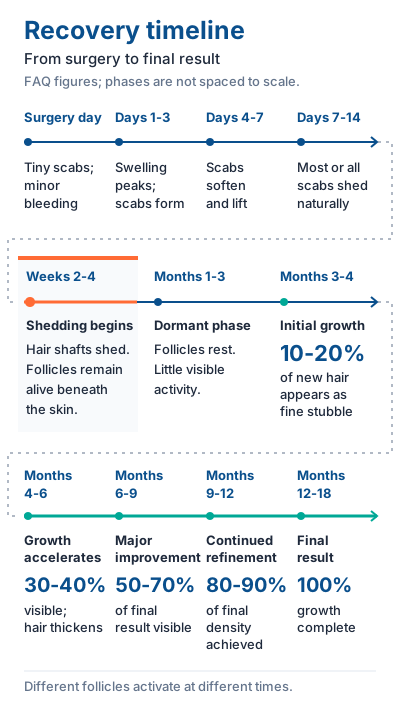
Day of Surgery (Hour 0)
Immediately post-procedure:
- Recipient area: Tiny scabs around each graft, minor bleeding (normal)
- Donor area: FUE shows small dots, FUT has bandage over sutured area
- Feeling: Numbness from anesthesia (wears off in 4-6 hours), mild tightness
- Appearance: Swollen forehead (looks like you had Botox), redness
What to do:
- Ice packs on forehead (NOT on grafts) to reduce swelling
- Sleep elevated (45-degree angle) using wedge pillow or stacked pillows
- Take prescribed medications (antibiotics, pain relief, anti-inflammatory)
- Protective pillowcase (some blood/oozing first night is normal)
First night expectations:
- Mild discomfort (2-4/10 pain scale)
- Difficulty getting comfortable sleeping position
- Some blood on pillowcase (small amount normal)
- Forehead feels tight
Days 1-3: The Swelling Phase
What happens:
- Swelling peaks day 2-3 (gravity pulls fluid down to forehead, sometimes around eyes)
- Scabs forming around each graft
- Donor area sore (FUT more uncomfortable than FUE)
- Redness prominent
Physical sensations:
- Tightness in scalp
- Itching begins (sign of healing, resist scratching)
- Mild throbbing if you bend over quickly
- Numbness in transplanted area
Appearance:
- Forehead swollen (sometimes dramatically: "Frankenstein" look)
- Black eyes possible (rare, happens when swelling migrates down)
- Scabs visible (looks like scraped scalp)
- Donor area: FUE looks like red dots, FUT has bandage
Activity level:
- Stay home, rest
- No bending over
- No exercise
- Gentle walking okay
- Work from home if desk job
First wash (day 2 or 3):
- Clinic usually performs first wash or provides detailed instructions
- Extremely gentle (pour water, don't spray)
- Special shampoo (provided by clinic)
- Pat dry with soft cloth
Days 4-7: Scabs Begin Shedding
What happens:
- Swelling receding significantly
- Scabs starting to soften and lift
- Itching intensifies (most annoying phase)
- FUT sutures may dissolve or be removed day 7
Physical sensations:
- Intense itching (antihistamines help)
- Less tightness
- Numbness still present (normal for weeks-months)
- Donor area healing well (FUE nearly invisible, FUT scar pink)
Appearance:
- Forehead swelling 70-90% gone
- Scabs prominent but starting to lift edges
- Redness fading to pink
- Small amount of shock loss (existing hairs shedding) may start
Activity level:
- Can return to desk work (day 7-10)
- Light activities okay
- No gym, swimming, heavy exercise
- Avoid direct sun (wear loose hat if going out)
- No helmets, tight hats
Washing:
- Daily gentle washing (helps scabs shed naturally)
- Can use slightly more water pressure by day 7
- Don't pick at scabs (they'll come off with washing)
Days 7-14: Scabs Gone, Looking More Normal
What happens:
- Most/all scabs shed naturally
- Transplanted area looks pink but healing
- Small red dots where grafts placed (fading)
- FUT sutures removed (if not dissolvable)
Physical sensations:
- Itching decreasing
- Scalp feeling more normal
- Occasional "zingers" (nerve regeneration: brief sharp sensations, normal)
- Donor area comfortable
Appearance:
- Scabs gone or nearly gone
- Pink scalp where grafts were placed
- Transplanted hairs standing up (short, from day of surgery)
- Overall looks acceptable to public
Activity level:
- Back to work (can wear hat if needed to cover pinkness)
- Light exercise okay (walking, light jogging)
- No heavy gym, swimming, contact sports yet
- Can wear loose baseball cap
Safe to fly: After day 7, most surgeons clear patients for air travel
Weeks 2-4: The Shedding Phase Begins
What happens in the phase that causes the most panic:
Transplanted hairs fall out. This is called "shock loss" or telogen effluvium.
What you see:
- Transplanted hairs (the ones placed during surgery) shedding
- Sometimes existing (non-transplanted) hairs also shed temporarily
- Area looks thin, sometimes thinner than pre-transplant
What's actually happening:
- Hair shafts shed but follicles remain alive beneath skin
- Follicles enter resting (telogen) phase before growing new hair
- This is NORMAL and EXPECTED
Critical to understand:
- This is NOT failed transplant
- The follicles are fine
- New hair will grow from those follicles starting month 3-4
Analogy: Like a plant being repotted: it drops leaves initially but the roots are establishing
Appearance:
- Thin or very thin in transplanted area
- Can look worse than before procedure
- Donor area healing well (FUE: tiny white dots if you look closely, FUT: pink line)
Activity level:
- Normal activities resumed
- Can resume gym (after day 14)
- Swimming okay after week 3-4
- Avoid direct trauma to scalp (no contact sports yet)
Emotional state: This is the hardest phase psychologically. Expect:
- Worry that transplant "didn't work"
- Regret ("I looked better before")
- Impatience
What to do: Trust the process. Every successful transplant goes through this. Look at before/after timelines online. Everyone experiences shedding.
Months 1-3: The Dormant Phase ("Nothing Happening")
What happens:
- Not much visible activity
- Scalp looks relatively normal but thin
- Follicles beneath skin preparing for growth phase
Physical sensations:
- Scalp feels normal
- Numbness mostly resolved (small areas may remain numb 3-6 months)
- Occasional itching (new hair starting beneath surface)
Appearance:
- Thin in transplanted area
- Redness completely resolved
- Donor area: FUE scars barely visible, FUT scar pink/red (fading over 12 months)
- No visible hair growth yet
Psychological challenge:
- Hardest waiting period
- "Did I waste my money?"
- Checking mirror obsessively (don't. You won't see daily changes)
What to do:
- Take monthly photos (same lighting, same angle)
- Focus on other things
- Follow medication protocol if prescribed (finasteride, minoxidil)
- Attend follow-up appointments
Months 3-6: New Growth Emerges
Month 3-4: First visible growth
- Fine, wispy hairs emerging
- Very thin initially (like peach fuzz)
- Growth is patchy (different follicles activate at different times)
- Some areas grow faster than others
Physical characteristics of new hair:
- Finer texture than mature hair
- May be lighter color
- Curly or wavy initially (normalizes later)
- Sparse coverage
Month 5-6: Accelerating growth
- Hair thickening
- Length increasing (hair grows ~1cm/month)
- Patchiness filling in
- Visible improvement starts becoming noticeable
Appearance:
- 30-50% of final density visible
- Still thin but improving
- Can style hair (gentle brushing okay)
- Results starting to look encouraging
Psychological shift:
- Relief ("It's finally working!")
- Impatience to see final result
- Temptation to judge result too early (wait until month 12)
Months 6-9: Significant Visible Improvement
What happens:
- Steady, consistent thickening
- Hair texture maturing
- Density increasing week by week
Appearance:
- 50-70% of final density
- Noticeable improvement
- Can style normally
- Most patients satisfied with this stage (though not final result)
Hair characteristics:
- Texture normalizing
- Caliber thickening
- Color darkening to match native hair
Activity:
- Completely normal life
- All exercises safe
- Can dye hair (after month 6)
- Can get haircuts (tell stylist about transplant if going short)
Months 9-12: Near-Final Result
What happens:
- Approaching full density
- Hair fully matured
- Minor continued thickening months 12-18
Appearance:
- 70-90% of final density achieved
- Result looks natural and complete
- Ready for assessment
Month 12 evaluation:
- Official result checkpoint
- Surgeon assesses graft survival
- Determine if touch-up needed
- Some clinics offer free touch-up if areas didn't grow well
Questions to ask surgeon at month 12:
- What's the graft survival rate?
- Are there areas needing more density?
- Should I wait until month 18 to assess?
- Is a touch-up recommended?
Months 12-18: Final Maturation
What happens:
- Continued subtle thickening
- Hair caliber increasing slightly
- Final texture settling
Appearance:
- 90-100% of final density
- Completely natural look
- Indistinguishable from native hair
This is final result. What you see at month 18 is what you have permanently.
Shock Loss of Existing Hair
Important to distinguish:
- Transplanted hair shedding: Expected, normal, happens to everyone
- Shock loss of existing (native) hair: Happens to ~20-40% of patients
What is shock loss?
- Non-transplanted hairs near transplant area go into shedding phase
- Caused by trauma to scalp (surgery stress)
- Temporary: hair grows back within 3-6 months
Who gets it:
- More common in people with miniaturized (thinning) hair
- Less common in people with thick, healthy existing hair
- Unpredictable
What to do:
- Don't panic
- Continue finasteride (if prescribed) to help hair return
- Wait. It grows back
Permanent loss:
- True permanent shock loss is rare (<5% of patients)
- Usually happens only with very aggressive packing or poor technique
Recovery Comparison: FUE vs FUT
Similarities:
- Same recipient area healing
- Same scabbing and shedding timeline
- Same growth phases
Differences:
| Stage | FUE | FUT |
|---|---|---|
| Immediate pain | 2-4/10 | 3-5/10 |
| Donor healing | 7-10 days | 10-14 days |
| Sutures | None | Removed day 7-14 |
| Return to exercise | Day 10-14 | Day 14-21 |
| Donor numbness | Rare | Common (3-12 months) |
| Donor appearance (healed) | Tiny white dots | Thin linear scar |
Red Flags During Recovery
When to contact your surgeon immediately:
Week 1-2:
- Excessive bleeding (more than small amount)
- Pus or yellow discharge
- Increasing redness/swelling after day 3
- Fever (>100.4°F / 38°C)
- Severe pain (>6/10) not controlled by medication
Month 3-6:
- No growth at all by month 6 (rare but requires investigation)
- Severe shock loss continuing beyond month 4
Month 12+:
- Extremely poor graft survival (<60%)
- Infection or cyst formation
Most concerning sign: Increasing symptoms after initial improvement (suggests infection)
Managing Expectations Timeline
Be patient. Final result takes 12-18 months.
Common milestones to remember:
- Month 1: Looks thin (this is normal)
- Month 3: First growth appears
- Month 6: Visible improvement
- Month 12: Near-final result
- Month 18: Final result
Don't judge before month 12. Early assessment leads to unnecessary worry.
Next steps:
- Learn proper aftercare: Hair Transplant Aftercare Guide
- Understand success factors: Hair Transplant Success Rate
- Return to main guide: Complete Hair Transplant Guide