Ptosis Surgery in Thailand: Repair for a Droopy Eyelid, Recovery and Risks
Ptosis surgery can raise a droopy upper eyelid. Ptosis means the upper eyelid's edge sits lower than normal when looking straight ahead, according to EyeWiki.
Excess eyelid skin and a low brow are separate findings. Repair may involve an inside-lid procedure, the eyelid's lifting muscle or a forehead sling, with the approach chosen after an eye assessment.
An eye examination is needed to diagnose ptosis and assess its effect on your vision.
Clinics cannot pay to be listed or ranked higher on AsiaPatient.
What ptosis surgery treats, and how it differs from cosmetic eyelid surgery
The upper eyelid margin is the focus of ptosis repair. EyeWiki distinguishes a low lid edge from excess skin, called dermatochalasis, and a low eyebrow, called brow ptosis, because their surgical treatment differs.
Blepharoplasty is cosmetic eyelid surgery to remove excess skin or fat, as the UK National Health Service (NHS) describes it. Leeds Teaching Hospitals says removal of loose skin with blepharoplasty may also be needed during ptosis treatment.
Ptosis can be largely cosmetic when mild, according to Cambridge University Hospitals. In more severe cases, it says the lid edge can cover part of the pupil and block upper vision.
Ask the surgeon to explain which finding they are treating. If the proposed operation includes both ptosis repair and skin removal, ask what each part is intended to change.
Why assessment comes before a repair approach
EyeWiki's examination guidance includes visual acuity, meaning how clearly you see, and refraction, which checks the eye's focusing error. It also includes brow position, excess skin, eyelid measurements, eye movement, examination for dry eye and the effect on the visual field.
The levator is the muscle that lifts the upper lid. EyeWiki describes measuring its function by holding the brow still and measuring how far the eyelid moves from looking down to looking up.

Ask what the measurements mean for your proposed repair. Ask whether the assessment identifies excess skin or brow position as a separate concern, and whether the plan includes treating either.
Vision and lid position are considered separately
Cambridge's adult ptosis information includes a visual-field test, which assesses the area you can see. Its description of mild versus more severe ptosis separates a cosmetic concern from possible obstruction of upper vision.
Ask the clinician to explain the visual-field findings alongside the eyelid examination. Discuss the intended lid position and any concern about vision as separate parts of the consultation.
Ptosis repair approaches sources describe
EyeWiki says the choice of operation depends on the diagnosis, treatment goals, surgeon preference and lifting-muscle function. Ask the surgeon to connect the proposed operation to those findings.
Muller muscle-conjunctival resection
Muller muscle-conjunctival resection is an inside-lid approach. EyeWiki describes it for mild to moderate aponeurotic ptosis with very good levator function.
Aponeurotic ptosis refers to stretching or separation of the lifting muscle's attachment, as EyeWiki describes it. Ask whether that is your diagnosis and why an inside-lid approach is being proposed.
Levator advancement or resection
EyeWiki describes levator advancement or resection for good to fair lifting-muscle function. These are operations on the eyelid's lifting muscle or its attachment.
Cambridge describes a small incision in the natural skin crease to expose and shorten the lifting muscle. It says the surgeon occasionally makes the incision inside the lid instead.
Ask where your incision would be and what the surgeon plans to adjust. If the quote simply says "ptosis correction," ask for the operation's full name.
Frontalis sling
A frontalis sling uses the brow or forehead to help lift the eyelid. Leeds describes passing a sling from the upper lid to the brow or forehead when the lifting muscle is too weak.
EyeWiki says a frontalis sling is performed for patients with poor or absent levator function. Ask why a sling is being considered and what material the surgeon proposes to use.
Anesthesia and time in the operating room
Cambridge says adult ptosis surgery is usually a day case under local anesthesia, which numbs the area. It gives an average operating time of 45 minutes to one hour for each eye.
Leeds also describes surgery mostly under local anesthesia, with general anesthesia sometimes used. Ask which is planned for you and whether the time estimate covers one eye or both.
What Thai hospitals and clinics publish about ptosis repair
Bumrungrad's drooping-eyelid information distinguishes ptosis from excess eyelid skin and says the clinician should assess the cause before treatment. Its assessment wording is: "diagnose the actual cause of the drooping."
On its broader eyelid, lacrimal and orbital surgery page, covering eyelid, tear-system and eye-socket surgery, Bumrungrad states: "Non-absorbable stitches will be removed at the hospital." Ask which stitch type your ptosis repair would use and when the hospital wants to see you again.
Published operation labels and prices
Yanhee's public price list uses the label "(Mild) Levator Operation: 1 side". Ask the hospital which operation and which eye or eyes its quotation covers.
Pongsak Clinic lists ptosis surgery using levator advancement at THB 34,900 per side, read 4 November 2026. Its procedure description says: "Approximately 1 hour under local anesthesia. No overnight stay required".
Ask Pongsak for the assessment and review appointments that would apply to your booking. For the wider pricing guide, see eyelid surgery cost in Thailand.
Follow-up questions an overseas patient should put in writing
Request the assessment, operation plan and follow-up arrangements in writing.
Use the consultation to resolve these points before making travel plans:
Ask for a contact name and a route for urgent concerns. Confirm how the team will arrange an examination if photographs or a remote conversation are insufficient.
Ptosis repair recovery and care
Cambridge says eyelid swelling varies and usually lasts 10 to 14 days.
Leeds describes swelling, bruising and blurry vision as common after ptosis repair. It says stitches are removed five to seven days after surgery, except when self-dissolving stitches are used.
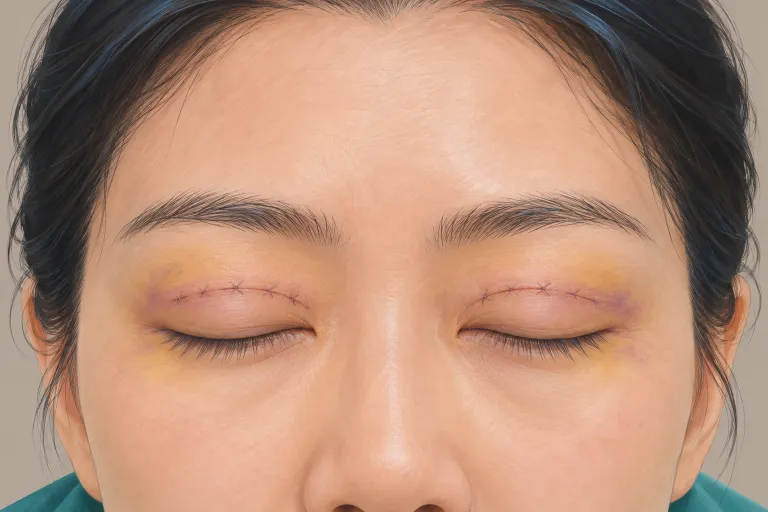
Swelling and stitch removal happen on different schedules. Ask your team when they plan to check the wound and lid position, and whether your stitches need removal.
Request written instructions for any prescribed drops or ointment. Ask how to apply them, how long to use them and what to do if you have difficulty following the instructions.
For the wider aftercare guide, see eyelid surgery recovery. Ask the treating team for separate advice on work, driving and travel, based on the operation you have agreed to.
Ptosis surgery risks and the possibility of further surgery
Leeds lists bleeding, delayed healing, scarring and infection among possible complications. It also lists dry eye, double vision, remaining droop, an eyelid lifted too high and residual differences between the eyelids.
Cambridge warns that the eyelid may not close fully and can dry because the eye is exposed. Ask how the surgeon will assess eye closure and manage dryness after repair.
Leeds also describes possible drooping of the eyelid on the unoperated side. It says a rare bleed behind the eyeball can threaten sight.
Ask which symptoms need urgent assessment, where that assessment would happen and whom to contact outside clinic hours. Have those instructions before discharge.
In this section: eyelid surgery in Thailand, eyelid surgery in Bangkok, what eyelid surgery costs in Thailand, double eyelid eyelid surgery, lower eyelid surgery and eyelid surgery recovery.
Frequently asked questions
What is ptosis surgery?
It is surgery to raise a drooping upper eyelid. Leeds describes approaches through the skin crease or inside the lid, and a forehead sling when the lifting muscle is too weak.
Is ptosis surgery the same as cosmetic eyelid surgery?
The NHS describes blepharoplasty as removing excess eyelid skin or fat. Leeds describes ptosis repair as correction of the drooping upper lid and says blepharoplasty may also be needed to remove loose skin.
How long does ptosis repair recovery take?
Cambridge says swelling usually lasts 10 to 14 days. Leeds gives five to seven days for stitch removal unless dissolving stitches were used.
Ask your surgeon for the review schedule and activity advice for your repair.
What are the risks of ptosis surgery?
Leeds lists infection, bleeding, dry eye, double vision, remaining droop, an eyelid lifted too high and residual asymmetry among possible complications. It also describes rare bleeding behind the eye that can threaten sight.
Ask which risks matter most for your eyes and the planned operation.
How successful is ptosis surgery?
Ask what the surgeon means by success: the intended height, eye closure and whether further surgery is needed.
What should I avoid after ptosis surgery?
Ask the treating team for written instructions on rubbing or wetting the eyes, contact lenses, makeup and exercise. Ask separately about driving and returning to work, and request instructions for any prescribed eye medication.
Read next
- Upper and Lower Blepharoplasty: Surgery TypesCompare upper, lower and double-eyelid surgery, incision routes and skin or fat treatment. What to ask before choosing eyelid surgery in Thailand.
- Upper eyelid surgery: assessment and recoveryWhat upper eyelid surgery treats, how surgeons assess the lid, functional versus cosmetic concerns, recovery, risks and Thai planning.
- What eyelid surgery costs in ThailandEvery published hospital and agency eyelid surgery price we found, with what each includes and the date we read it.
- Eyelid surgery in BangkokBangkok hospitals and clinics that print an eyelid surgery price, with what each includes.
Ask Whether Ptosis Repair Is Needed Alongside Eyelid Surgery
Tell us the procedure, your budget and your dates, and any hospitals you are considering.
Get My Free Quote →Free, no obligation. Nothing goes to a clinic without your OK.