Endoscopic Brow Lift: Technique, Results, Recovery and Thailand Options
An endoscopic brow lift uses three to five small scalp incisions behind the hairline and a viewing instrument called an endoscope to lift the brow and forehead tissues, according to the American Society of Plastic Surgeons (ASPS) recovery guide. The guide says forehead skin isn't removed with this approach.
For the broader procedure, see brow lift in Thailand. This is general information, not an individual surgical recommendation.
Clinics cannot pay to be listed or ranked higher on AsiaPatient.
How an endoscopic brow lift works
The ASPS guide describes using the endoscope to see beneath the forehead through separate scalp openings. The surgeon works through those openings to reposition the tissues.
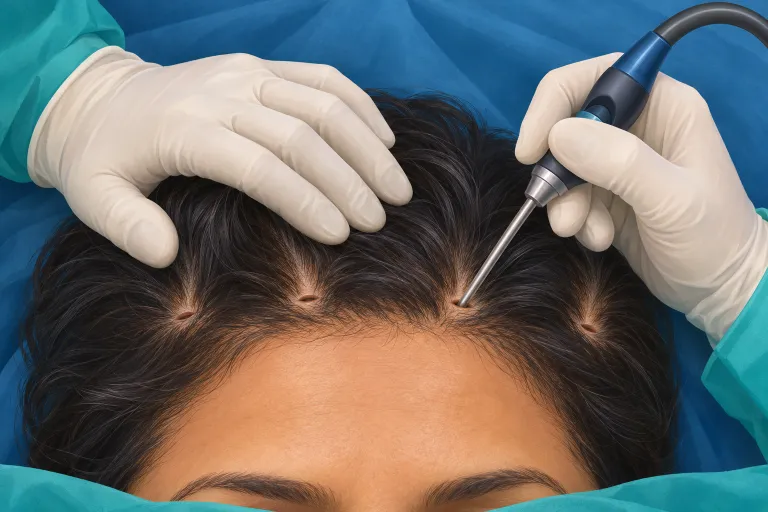
Ask the surgeon to explain how the tissues will be held in position. If a device is proposed, ask for its name and why it is part of your operation.
Endoscopic brow lift and endoscopic forehead lift
ASPS uses forehead lift as another name for brow lift. In Thailand, Bangkok Hospital labels its operation "Endoscopic Forehead and Brow Lift with Endotine".
Ask what the hospital means by each term in your treatment plan. Have the surgeon identify the areas included, particularly if the plan also mentions the mid-face or temples.
What the procedure aims to change
The ASPS recovery guide describes lifting the eyebrows and forehead tissues. Ask which part of your brow the surgeon proposes to raise and how that relates to the change you want.
The American Academy of Facial Plastic and Reconstructive Surgery (AAFPRS) says brow lifting is sometimes combined with eyelid surgery, also called blepharoplasty. If both appear in your plan, ask what each operation is intended to change.
Endoscopic vs coronal, hairline and temporal brow lifts
Incision placement is a practical starting point for the discussion. The following patterns come from the ASPS guide to brow lift recovery; the lengths are metric conversions of its inch measurements.
| Approach | Incision pattern | Area or feature described |
|---|---|---|
| Endoscopic | Three to five separate scalp incisions behind the hairline, about 2.5 cm each | Lifts brow and forehead tissues without removing forehead skin |
| Open | Across the upper scalp, with the behind-hairline version running from ear to ear | Incision across the upper scalp |
| Hairline | Along the hairline | An alternative position for an open incision |
| Temporal | About 5 to 7.6 cm on each side, in the temporal hairline or scalp | Elevates the outer brow |
Ask the surgeon which approach suits your intended change and why. For a high or receding hairline, ask how the proposed incision position affects the plan and where the scars would sit.
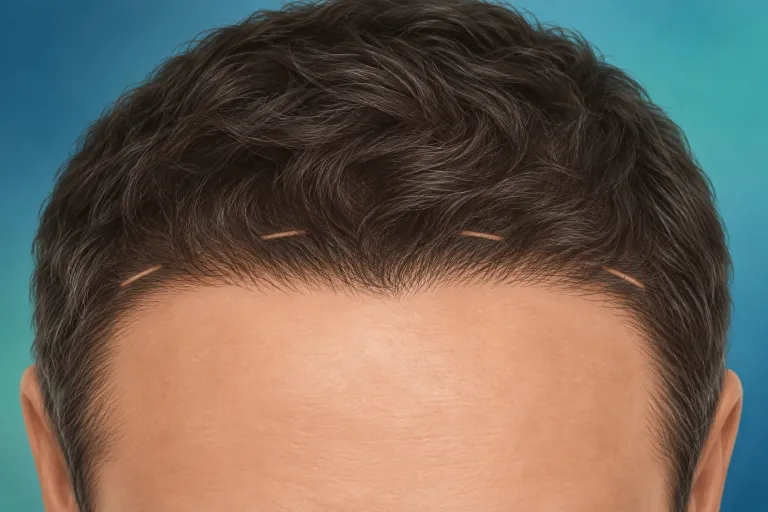
Yanhee's endoscopic facial-rejuvenation page describes its candidates as having early to moderate aging, reasonable skin elasticity, and mid-face descent or volume loss. That description belongs to Yanhee's broader mid-face and brow plans; ask how it applies to an isolated brow lift.
What comparative reviews report
Byun and colleagues' 2013 systematic review included 82 studies of brow-lift techniques. Its reported rates differ by both incision and the tissue layer in which the surgeon worked.
| Technique in the 2013 review | Reported complications |
|---|---|
| Endoscopic, subperiosteal dissection | Altered sensation 6.2%; asymmetry 3.6%; hair loss 3.0%; incomplete eyelid closure 2.7% |
| Coronal, subgaleal dissection | Unacceptable scarring 3.6%; hematoma (blood collection) 0.5%; infection 0.2% |
| Anterior hairline, subcutaneous dissection | Hair loss 8.5%; altered sensation 5.4%; unacceptable scarring 2.1%; skin tissue death 1.8% |
Ask the surgeon to explain the tissue layer planned for your procedure and how it compares with these study groups.
A separate 2018 systematic review by Cho and colleagues included 76 studies. The highest reported rate in each category was revision after hairline lift, 7.4%; numbness after direct lift, 5.5%; asymmetry after temporal or lateral lift, 1.5%; and hair loss after endoscopic lift, 2.8%.
These are findings from groups of published studies. Keep each percentage with its technique and complication when discussing it with the surgeon.
How long does an endoscopic brow lift last?
A 2025 systematic review and meta-analysis by Sibar and colleagues combined results from 12 studies of long-term brow elevation. It reported pooled elevation of 3.25 mm at the inner brow, 3.86 mm centrally and 4.35 mm laterally.
Those figures describe measured brow position. For a proposed operation, ask how long the surgeon expects the change to last and what follow-up supports that estimate.
What one recent short-term clinical series found
One 2026 US study of short-term outcomes by Liu and colleagues reviewed 312 endoscopic brow lifts done without depressor resection at Massachusetts Eye and Ear, performed from January 2016 through December 2023. Photographic analysis in 113 cases found an average increase of 2 to 3 mm in inner, central and outer brow height.
This was a retrospective review of previous operations. Keep the photographic subset separate from the full surgical group when discussing the result.
Thai hospital statement on longevity
Yanhee prints 5 to 10 years under "Typical result longevity" for its endoscopic facial-rejuvenation plans. Its description covers mid-face and brow repositioning, sometimes using an absorbable Endotine device to hold tissue in position.
Treat that interval as the hospital's estimate for its wider plan. Ask for the expected duration of the particular brow operation proposed to you.
Endoscopic brow lift recovery: source-by-source timeline
Return to work, stitch removal and normal activity are different milestones. The ASPS guide, AAFPRS patient information and Yanhee's wider treatment description give the following timings.
| Source and scope | Milestone | Timing the source gives |
|---|---|---|
| AAFPRS, forehead and brow lift | Bandage removal, if bandages are used | 1 to 3 days |
| AAFPRS, forehead and brow lift | Swelling and bruising | During the first 10 days |
| AAFPRS, forehead and brow lift | Suture removal | Usually within 7 to 10 days |
| ASPS guide, endoscopic brow lift | Return to work | Most patients within one week |
| ASPS guide, other brow-lift procedures | Return to work | Around two weeks |
| Yanhee, endoscopic facial rejuvenation | Return to normal activity | Most people in 10 to 14 days |
Ask for separate dates for work, exercise and wound review. Use the brow lift recovery in Thailand guide when preparing those questions.
Planning a return flight
Ask the treating surgeon when you can fly and which checks should happen before departure. Ask when the wound-review and stitch-removal appointments would fall before setting the travel dates.
Also ask who will answer concerns after you return home. If your stay needs to change, who will arrange the next examination?
Risks and reported complication rates
The ASPS brow-lift safety page lists anesthesia risks, bleeding, infection and poor wound healing. It also lists hair loss around incisions, an elevated hairline, facial nerve injury or weakness, altered sensation, asymmetry and unfavorable scarring.
Other ASPS-listed risks include skin loss and eye irritation or dryness. You might need revision surgery.
Ask which risks relate to your proposed technique and what symptoms should prompt a call to the surgical team. Request the contact details and instructions in writing.
A recent short-term endoscopic series
The 2026 US study of short-term outcomes by Liu and colleagues was a retrospective chart review of 312 endoscopic brow lifts done without depressor resection at Massachusetts Eye and Ear. The population was 79.3% female, with a mean age of 64.
The study recorded two complications, 0.6%: capsule formation around a dissolved Ultratine device and an ear blister. It recorded six revisions, 1.9%, during the study period.
These rates belong to that hospital's study population. Ask your surgeon about complications and revisions in their own patients having the proposed operation.
Ask how a quoted complication rate was counted, how long patients were followed, and whether revisions were counted separately. Keep those answers beside the percentage.
What Thai hospitals print about endoscopic brow lifts
Bangkok Hospital Headquarters lists "Endoscopic Forehead and Brow Lift with Endotine" with one hospital night. Its fly-in package runs until 31 December 2026, read 3 November 2026.
The package terms list operating and recovery rooms, surgical supplies and medication, and the surgical and anesthesia teams, ending that inclusion line with "only". A second line includes the standard inpatient room, nursing, meals and listed medical equipment.
The same terms exclude specialist consultation, laboratory investigations, pathology, special instruments and home medication. Treatment for underlying conditions or surgical complications is also excluded.
Bangkok Hospital's medical-clearance wording differs between its pages, read 3 November 2026:
- Its plastic surgery package page requires an internal physician's assessment before surgery and states: "This is an additional cost."
- Its SURGERY MASTER page advertises free clearance for qualifying fly-in surgery, subject to a minimum spend and at least one hospital night.
Ask which clearance terms apply to your booking.
Yanhee describes small hairline incisions, an endoscope and mid-face and brow repositioning, sometimes with an absorbable Endotine device. Its broader plans take 2 to 4 hours under general anesthesia or sedation, according to the hospital.
Questions a written treatment plan needs to answer
Ask for the exact operation and follow-up schedule in writing.
For the financial questions, see brow lift cost in Thailand. Request inclusions and exclusions for the exact operation on your plan.
In this section: brow lift in Thailand, what a brow lift costs in Thailand and brow lift recovery.
Frequently asked questions
What is an endoscopic brow lift?
The ASPS guide describes using small scalp openings and an endoscope to lift brow and forehead tissues. The openings sit behind the hairline.
Is an endoscopic brow lift the same as an endoscopic forehead lift?
ASPS uses both brow lift and forehead lift terminology. Ask the surgeon to define the intended treatment area rather than relying on the procedure name alone.
How does an endoscopic brow lift compare with a coronal brow lift?
The ASPS guide describes separate scalp openings for endoscopic surgery and an incision across the upper scalp for an open approach. Ask the surgeon to explain the proposed tissue layer as well as the incision, since the 2013 Byun review reports complications by both.
How does a temporal brow lift differ?
The ASPS guide describes incisions on each side at the temples and elevation of the outer brow. Ask whether that matches the area you want changed.
How long is endoscopic brow lift recovery?
ASPS says most patients return to work within a week after an endoscopic lift. Yanhee gives 10 to 14 days to normal activity for its broader facial-rejuvenation plan.
How long do endoscopic brow lift results last?
Sibar's 2025 analysis of 12 studies reports long-term measured brow elevation. Yanhee gives a typical 5 to 10 years for its wider endoscopic plan; ask the surgeon for an estimate tied to your proposed operation.
Ask Which Brow Lift Technique the Surgeon Plans
Tell us the procedure, your budget and your dates, and any hospitals you are considering.
Get My Free Quote →Free, no obligation. Nothing goes to a clinic without your OK.