Breast Reduction Scars: Patterns, Healing and Questions to Ask
Breast reduction leaves permanent scars, with their position depending on the operation, according to Cleveland Clinic. Its guide describes a lollipop pattern around the areola and down to the lower crease, while an anchor pattern adds a scar along that crease.
For the procedure overview, see breast reduction in Thailand. This page explains scar patterns and care questions; the section's cost and recovery pages cover budgeting and recovery planning.
Clinics cannot pay to be listed or ranked higher on AsiaPatient.
Why breast reduction leaves scars
The UK National Health Service (NHS) describes removing fat, glandular tissue and skin, then reshaping the remaining breast tissue. The NHS says the operation generally also involves moving the nipple to a new position, usually while it is still attached to its blood supply.
Those steps involve incisions, or surgical cuts. The British Association of Aesthetic Plastic Surgeons (BAAPS) describes different reduction techniques with different scar patterns.
Ask the surgeon to describe every planned incision before you decide. Include the circular scar around the areola, the darker area surrounding the nipple, when discussing what a vertical or anchor pattern means.
Breast reduction scar patterns
| Pattern | Where the scar sits | What the source says about its use |
|---|---|---|
| Vertical, or lollipop | Around the areola and down to the lower breast crease, without a horizontal fold scar | BAAPS says the vertical pattern is less effective for particularly large breasts. |
| Anchor, or inverted T | Around the areola, down to the crease and horizontally along the crease | BAAPS describes this pattern; Cleveland Clinic confirms the additional incision along the fold. Ask why the surgeon proposes it for your operation. |
| Circumareolar | A circular scar around the areola | BAAPS says this technique is suitable when only a small amount of tissue needs removal. |
Anchor vs lollipop breast reduction
The horizontal scar in the lower crease is the visible difference between these patterns in the BAAPS leaflet. Both also include a scar around the areola and a vertical scar below it.
Ask why the surgeon recommends the proposed pattern for the amount of tissue and skin they plan to remove. BAAPS's statement that the vertical pattern is less effective in particularly large breasts is a reason to ask about suitability before choosing a pattern.
Oxford University Hospitals' reduction leaflet says wound breakdown occurs more commonly at the anchor scar's T-junction. This is the point where the vertical incision meets the horizontal incision under the breast.
Ask how the team checks that junction and what to do if it opens. The scar pattern discussion should include the wound-care plan you will follow after discharge.
Vertical breast reduction scar
In Cleveland Clinic's description, the vertical pattern has an incision around the areola and another running from its lower edge to the breast crease. The word vertical describes that downward line; the circular incision is also part of the pattern.
Yanhee International Hospital calls its usual reduction pattern "short-scar" and "lollipop". The hospital says most reductions use it, usually without a horizontal fold incision, but very large reductions can still need an incision beneath the breast.
Ask whether the proposed plan includes that additional incision and what circumstances could change the plan. Get the intended scar locations written into your consultation notes.
Breast reduction scar healing over the months
Ask the surgeon about wound healing and later scar changes separately.
| Stage | What the source describes |
|---|---|
| First 6 weeks | The NHS says scars may look red or different from your usual skin color. It says most fade over time. |
| One to two months after surgery | Cleveland Clinic says hypertrophic scars, raised scars that remain within the incision, appear in this period. |
| 6 to 12 months | Oxford University Hospitals says scars and breast shape can take this long to settle. |
| After one year | Cleveland Clinic describes this as the remodeling stage of healing. |
The breast reduction recovery in Thailand page covers recovery planning beyond scar appearance.
Cleveland Clinic says breast reduction scars never fully go away.
For an early wound concern, ask for a clinical review rather than using a later scar milestone as a waiting period. The NHS lists wound-healing problems among possible complications of reduction surgery.
Raised scars, hypertrophic scars and keloids
Cleveland Clinic distinguishes hypertrophic scars, which stay within original incision sites, from keloids, which grow beyond them.
The clinic says hypertrophic scars fade over time. It describes keloids as developing slowly over months to years and says they don't fade over time.
Ask the surgeon whether your previous scars or skin history affect your risk. If you've had a raised scar before, ask whether they want to examine it during the consultation.
The American Society of Plastic Surgeons (ASPS) lists unfavorable scarring and poor wound healing as possible risks. The NHS also lists thick scarring and wound-healing problems.
Ask which changes need review, how soon to report them, and who will assess them after you return home. Request a contact route for concerns before leaving the hospital.
Scar care after breast reduction
Follow the operating surgeon's wound and dressing instructions first. Cleveland Clinic's reduction scar guidance puts postoperative instructions at the start of scar care.
Cleveland Clinic says to wait for massage until the surgeon says it is safe. This is usually a few weeks after surgery. Ask the surgeon to show you the method and confirm which areas are ready before starting.
For silicone, Cleveland Clinic says an ointment containing silicone can make a scar less noticeable and also describes silicone gel sheets. Ask whether either option fits your incision's current condition and when to begin.
A 2013 Cochrane systematic review of silicone gel sheeting covered 20 trials involving 873 people and found that prevention studies in people prone to scarring were highly susceptible to bias.
The review's authors had affiliations in Australia and the UK. They reported fewer hypertrophic scars with silicone gel sheets than with no treatment in those prevention studies, while flagging their susceptibility to bias.
For sun protection, Cleveland Clinic advises sunscreen with sun protection factor (SPF) 30 or higher, or covering scars with clothing. The NHS guidance on cosmetic surgery abroad says patients shouldn't lie in the sun or go in the water during recovery.
Ask how to apply those instructions while dressings are still in place. Confirm when your surgeon allows bathing or swimming before planning either around the trip.
Scar revision and when to speak to the surgeon
Cleveland Clinic lists possible treatments including creams or ointments, massage and laser treatment. It also lists surgical scar procedures.
Discuss those options with the surgeon if a scar concerns you. Ask whether the incision has healed enough for the proposed treatment, what it aims to change and when the surgeon would reassess it.
Scar treatment doesn't mean complete removal: Cleveland Clinic says breast reduction scars never fully disappear. Ask what change is realistic for your scar before agreeing to a further procedure.
The Royal Marsden NHS Foundation Trust's reduction and lift leaflet lists fever, swelling, increased pain, redness, increased fluid leakage and bleeding from the wound among signs to look out for. It tells patients to contact their clinical nurse specialist if problems occur.
Before traveling, ask your own surgical team who fills that role and how to reach them. Include the plan for getting an examination locally if a concern develops after you return home.
What a patient flying home from Thailand should get in writing
Yanhee's procedure description says incisions close with "dissolving stitches and surgical tapes", with gauze dressings for support.
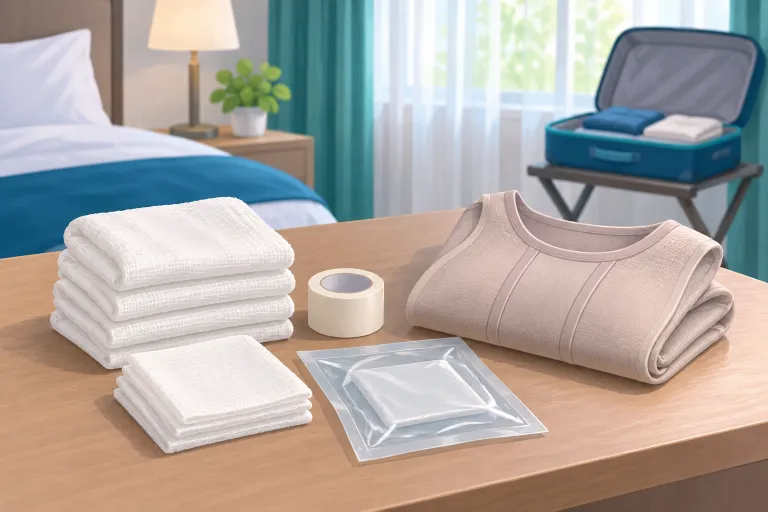
Both statements appear on Yanhee's page. Ask which applies to your closure and book the wound review or removal appointment with the surgical team.
Samitivej Srinakarin Hospital's breast lift and reduction article, dated 21 March 2022, states: "Follow-up consultations to monitor the patient’s situation will be held on days 7 and 10 following surgery." Ask whether that schedule applies to your booking and which visits require you to be there in person.
For travel home, the International Society of Aesthetic Plastic Surgery (ISAPS) says to find out how long to wait and follow the surgeon's advice. It also suggests asking about follow-up in your home country and whether you can call the surgeon with concerns.
Use these questions during the consultation:
ISAPS's travel-planning guidance also asks patients to establish the follow-up schedule and how long it will be before returning home. Ask for those dates in writing alongside the scar-care instructions.
For the budget questions, see breast reduction cost in Thailand.
In this section: breast reduction in Thailand, what breast reduction costs in Thailand and breast reduction recovery.
Frequently asked questions
Will I have an anchor scar or a lollipop scar after breast reduction?
The NHS says the pattern depends on the surgery. BAAPS describes both and says the vertical pattern is less effective for particularly large breasts. Ask the surgeon to explain the proposed incisions for your operation.
Where is a vertical breast reduction scar?
Cleveland Clinic describes an incision around the areola and a vertical incision from its lower edge to the crease beneath the breast. This is also called the lollipop pattern.
How long do breast reduction scars take to heal?
The NHS describes redness or a different skin color during the first 6 weeks. Oxford University Hospitals says scars and shape can take 6 to 12 months to settle.
Cleveland Clinic describes the stage after one year as remodeling and says breast reduction scars never fully go away. Ask separately about wound closure and later scar changes.
Can breast reduction scars become raised or keloid?
Yes. Cleveland Clinic describes hypertrophic scars that stay within the incision and keloids that grow beyond it. Ask the surgeon about your personal risk, including any previous raised scars.
When can I start silicone or scar massage after breast reduction?
For massage, Cleveland Clinic says to wait for the surgeon's permission, usually a few weeks after surgery. Ask separately when silicone is appropriate; the 2013 Cochrane review of silicone gel sheeting found its prevention studies highly susceptible to bias.
Can a breast reduction scar be revised?
Cleveland Clinic lists surgical scar procedures alongside options such as laser treatment. It says scars never fully go away. Ask which option, if any, suits your scar and when it could be considered.
Ask a Thai Surgeon Which Scar Pattern They Plan, in Writing
Tell us the procedure, your budget and your dates, and any hospitals you are considering.
Get My Free Quote →Free, no obligation. Nothing goes to a clinic without your OK.