Platysmaplasty: the neck muscle repair in a neck lift
Cleveland Clinic uses platysmaplasty as another name for neck lift surgery, which works by lifting and tightening the platysma, a thin sheet of muscle. The term also appears as another name for a neck lift in an American Society of Plastic Surgeons (ASPS) article, so ask which muscle, fat and skin work your proposed operation includes.
If you're considering a neck lift in Thailand, ask the surgeon to connect each proposed step to the change you're hoping to make.
Clinics cannot pay to be listed or ranked higher on AsiaPatient.
What platysmaplasty means
The platysma is the muscle being tightened. Cleveland Clinic describes lifting and tightening it during neck lift surgery.
When a surgeon uses the word platysmaplasty, ask whether they're describing that muscle work specifically or the wider neck operation. Request the explanation in plain language, including what else would be done during surgery.
Why neck bands are part of the question
ASPS includes muscle banding among the concerns neck lift surgery can treat. Its neck lift article describes vertical bands beneath the chin extending toward the chest as one reason people consider surgery.
Ask the surgeon to identify what accounts for the lines or bands that concern you. Have them explain whether muscle repair is being proposed for that feature and what change they consider realistic.
Muscle repair is not necessarily the whole operation
Cleveland Clinic's procedure description includes fat removal, tissue repositioning, platysma tightening and trimming excess skin.
For your own plan, ask for each step to be listed. If the concern includes fullness beneath the chin or loose skin, ask how the surgeon proposes to address it and whether that work is included alongside the muscle repair.
Platysmaplasty vs neck lift: what can be different
The ASPS neck lift article uses neck lift, platysmaplasty and lower rhytidectomy as names for the operation. Lower rhytidectomy is another surgical term for a neck lift.
Ask the surgeon to describe the tissues involved before comparing procedure names. The following questions separate muscle work from the broader operation and from a combined face and neck plan.
| Term in a proposed plan | Scope to confirm with the surgeon |
|---|---|
| Platysmaplasty or neck muscle repair | What will be done to the platysma? Is any fat or skin work included? |
| Neck lift | Which muscle, fat and skin changes are planned? Where will the incisions be? |
| Face and neck lift | What facial work is added? How does that affect the incision and aftercare plan? |
Cleveland Clinic describes muscle, fat and skin components, while ASPS describes standalone or combined operations. Ask for the exact operation in writing rather than choosing from the label alone.
When platysmaplasty may be one part of a neck lift
ASPS says a neck lift can include removing excess fat or skin and tightening neck muscles. Muscle repair might be one component.
Ask whether the planned aftercare covers muscle repair alone or a broader operation. The neck lift recovery guide covers recovery in more detail; request instructions for the operation proposed to you.
When a facelift is a separate scope question
A neck lift can be performed on its own, according to ASPS. Its article says face and neck lifts are often combined and may use the same incision.
If a facelift is suggested, ask which additional concern it would address. The neck lift vs facelift comparison explains the broader scope question.
Ask the surgeon to distinguish the neck work from any facial work in the plan. Request separate explanations of their aims, risks and aftercare, even if the operations would happen together.
How neck muscle repair may be approached
Ask how the proposed technique changes the muscle and where the surgeon needs access. If the consultation includes a technique name, request a drawing and a plain-language explanation of the steps.
Corset platysmaplasty
The Aesthetic Society describes corset platysmaplasty as sewing the platysma muscles together. In its discussion of more extensive surgery for advanced neck aging, it describes a small incision under the chin and a limited facelift-type incision behind each ear.
An incision is the surgical cut; submental means under the chin. Ask whether the proposed corset repair uses those access points and whether any other work is planned through them.
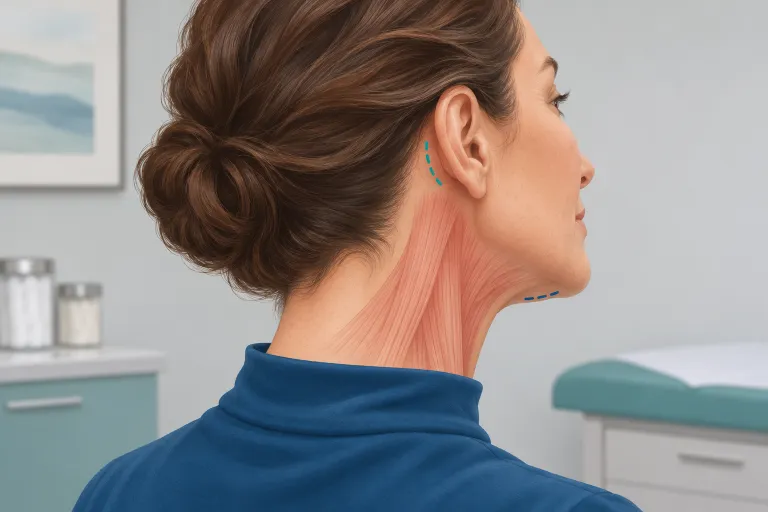
Ask why this approach is being discussed for your concern. Have the surgeon explain what they expect it to change and which features would remain outside the operation's aims.
Incisions and related work can change the scope
ASPS's procedure page describes neck lift incisions that often begin in front of the earlobe, wrap behind the ear and end in the hair behind it. This is its neck lift description within a broader page about facelift surgery.
Ask which cuts are proposed for your muscle repair, including whether there would be one under the chin. Request the location of every incision, with an explanation of the work planned through each one.
If the surgeon proposes a different incision pattern, ask them to draw that approach. Ask what changes if fat removal or skin removal is added.
What decides whether the discussion includes muscle repair
ASPS lists muscle banding, loose neck skin, fat beneath the chin and lower-face fat and skin relaxation that creates jowls among neck lift concerns. Jowls are the sagging tissue along the lower jawline.
Describe the feature you want to discuss before asking for a particular technique. Ask the surgeon to explain what they see on examination and how it relates to the operation they propose.
Questions about the concern
Ask these questions during the consultation:
- Is the feature I'm pointing to related to muscle banding, fat, loose skin or something else?
- Which part of the proposed operation addresses it?
- What would muscle repair alone aim to change?
- Which concerns would remain after the proposed operation?
- What are my options if I decide against surgery?
If you and the surgeon are using different words for the same concern, ask them to point to the area during the explanation. Request a written description you can refer to when reviewing the plan later.
Health and expectations still matter
Ask how your health history and expectations affect the proposal. Bring your medicine list and ask which medicines, smoking history, clotting concerns or existing conditions need assessment before a decision.
Ask the treating clinician whether any preparation or medicine change is needed, and who will coordinate it. Request an explanation of what would lead them to postpone surgery or advise against the proposed operation.
Describe the result you're hoping for in your own words. Ask which parts of that expectation the surgeon considers realistic and which they don't.
Questions to take to a consultation
Request answers for your own proposed surgery. Keep a copy of the written plan so you can compare it with the consent discussion and quote.
What exact operation is proposed?
Ask: "Are you proposing muscle repair alone, a neck lift with other tissue work, or a combined face and neck lift?" Follow with: "Which part addresses the concern I've described, and what would you leave unchanged?"
If the plan changes after examination, ask for an updated description. Request the reason for each additional procedure before deciding whether to proceed.
Which incisions, aftercare, and follow-up are included?
Ask for a drawing of the incision locations and written wound-care instructions. Confirm who will examine you afterward, where appointments happen and how you can reach the team between visits.
Ask whether dressings, medicines or a support garment are planned and included. Request arrangements for care after you return home, including how another clinician could obtain the operation details.
How long should a traveler remain locally?
Ask the treating surgeon to set out the local appointment schedule and advise how long you should remain nearby. Ask which checks need to happen before departure and who will assess whether flying is appropriate for you.
Request a plan for an appointment or departure date that needs to change. Confirm whom to contact if a concern develops after leaving Thailand.
Risks and planning boundaries before travel to Thailand
Request the surgeon's risk discussion for the exact operation, including any combined procedures. Ask how the care team would assess and manage a concern during your stay and after you return home.
What to expect during recovery
Cleveland Clinic describes swelling and bruising immediately after neck lift surgery, and says muscle tightness may also occur. It says patients receive incision-care and at-home recovery instructions.

Ask for those instructions before arranging your trip. Request separate advice on work, activity and follow-up appointments for your proposed surgery.
Risks to discuss
Cleveland Clinic lists bleeding, infection, changes in skin sensation and poor wound healing among neck lift risks. Its list also includes pain, swelling, bruising and temporary hair loss along incisions.
Ask the surgeon which risks are relevant to the planned muscle repair and any additional work. Request their explanation of warning signs, whom to contact and where you would be assessed if a concern arises.
What a Thailand traveler should get in writing
Yanhee Hospital's public list used separate labels on 4 November 2026: "Submental Lipectomy + Platysmaplasty" and platysmaplasty "(add+ to Neck Lift)". Submental means beneath the chin.
If either label appears in your quote, ask the hospital to explain each component and how it applies to your proposed operation. Request the incision plan, anesthesia, aftercare and local follow-up arrangements in writing.
For published charges, use the neck lift cost guide for Thailand. Keep the surgeon's description of the operation beside the quote when reviewing it.
In this section: neck lift scars.
Frequently asked questions
Is platysmaplasty the same as a neck lift?
ASPS uses platysmaplasty as another name for a neck lift. Ask whether your surgeon means the muscle repair specifically or a wider operation that includes skin or fat work.
Can platysmaplasty treat neck bands?
ASPS includes muscle banding among neck lift treatment concerns. Ask the surgeon to identify the cause of the bands that concern you and explain whether muscle repair is part of their proposal.
Does neck muscle repair remove fat or loose skin?
Cleveland Clinic describes fat removal, muscle tightening and excess-skin removal as components of neck lift surgery. Ask which components are included in your plan when the surgeon uses the word platysmaplasty.
What is corset platysmaplasty?
The Aesthetic Society describes sewing the platysma muscles together. Ask the surgeon to explain the proposed access points and any skin or fat work alongside that repair.
Can platysmaplasty be done without a facelift?
ASPS says a neck lift can be done alone, although it is often combined with a facelift. Ask whether the proposed muscle repair includes any facial surgery.
Where are the incisions for platysmaplasty?
In its discussion of more extensive surgery for advanced neck aging, The Aesthetic Society describes a small incision under the chin and a limited facelift-type incision behind each ear. Ask your surgeon to draw the incisions for the technique proposed to you.
What should I confirm before traveling to Thailand for neck muscle repair surgery?
Request the exact operation, tissues addressed and incision plan, plus the anesthesia and aftercare arrangements. Ask for local follow-up appointments and individual advice on how long to remain nearby and when to fly.
What should be included in a Thailand quote?
Ask the hospital to itemize the proposed procedures, anesthesia, hospital stay and follow-up. Request separate answers about medicines, dressings, any garment, additional visits and care for complications, with the charges or terms for each.
Read next
- Neck lift cost: Thailand beside the US, UK and AustraliaWhat Thai hospitals print for a neck lift, what US, UK and Australian sources give, and what each price covers.
- Neck lift recovery: the timeline and the trip homeWeek by week after a neck lift: drains, swelling, scars, return to work and the main risks, and what Thai hospitals print about stay and follow-up.
- Neck lift scars: where they sit and how they healWhere neck lift incisions sit, how a direct neck lift differs, what affects visibility, scar risks and what to ask before you travel.
Ask a Surgeon Whether Your Neck Concern Needs Muscle Repair
Tell us the procedure, your budget and your dates, and any hospitals you are considering.
Get My Free Quote →Free, no obligation. Nothing goes to a clinic without your OK.