Deep Plane Facelift: Technique, Recovery and Thailand Travel Planning
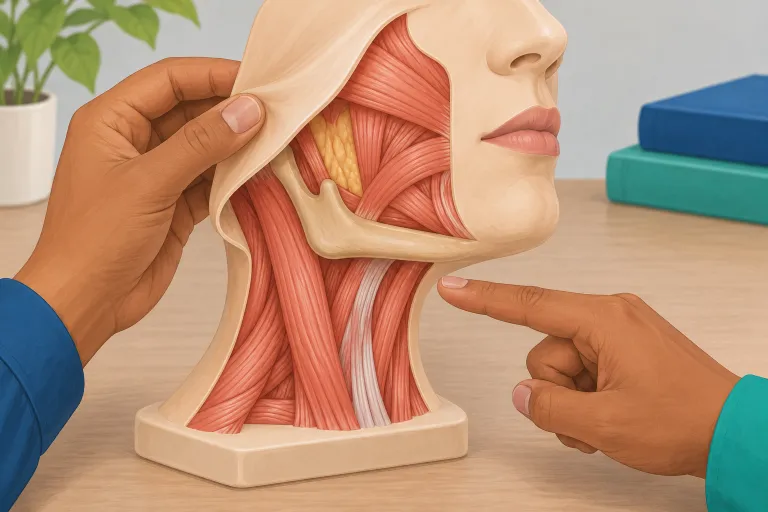
A deep plane facelift repositions muscle and fat beneath the SMAS, the facial tissue layer below the skin, according to the American Academy of Facial Plastic and Reconstructive Surgery (AAFPRS). If you're considering a facelift in Thailand, ask the surgeon which layers they plan to lift and how follow-up will fit your trip.
This is an information guide, not individual medical advice.
Clinics cannot pay to be listed or ranked higher on AsiaPatient.
What a deep plane facelift is
AAFPRS describes deep plane surgery as involving more extensive elevation of the SMAS and release of deeper attachments. Cleveland Clinic describes lifting the SMAS, fat and skin together as one unit.
Ask your surgeon to explain their planned operation using a drawing. Which tissues will move, where will the incisions sit, and will the plan include your neck?
What a facelift can and can't change
AAFPRS says a facelift repositions face and neck tissues, tightens underlying muscles and removes excess skin. Its focus is the cheeks, jawline and neck.
The same AAFPRS guide says surgery can't stop aging or correct skin texture and discoloration. It says a facelift can't lift brows or eyelids or restore volume. It also can't alter bone structure or change fundamental appearance.
So ask the surgeon to connect each proposed procedure to the concern you want addressed. If the plan includes other treatments, ask which change each one is intended to make.
Deep plane descriptions on Thai hospital pages
Wansiri Hospital's face-lift page uses the label "Deep Plane Facelift". Kamol Hospital describes work beneath the SMAS, including "releasing selected retaining ligaments" and repositioning deeper facial tissue.
So ask either hospital to put the intended technique and treated areas in your surgical plan. For any claimed advantage over another technique, ask for the supporting comparison and how it applies to your face.
Deep plane, SMAS and mini facelift: what differs
AAFPRS says facelift categories can overlap and surgeons can combine elements. The British Association of Aesthetic Plastic Surgeons (BAAPS) distinguishes mini lifts using sutures under the skin from operations that manipulate deeper layers.
Use these descriptions to prepare consultation questions. Ask the surgeon to explain which elements appear in your proposed operation.
| Technique or category | Method and area described by the source | Recovery context or question |
|---|---|---|
| Mini facelift | Cleveland Clinic: lower face and neck; quicker and less invasive | It says a mini facelift usually needs 5 to 7 days off work; ask whether that fits your work and planned surgery |
| SMAS facelift | AAFPRS: lifts and tightens the facial tissue layer beneath the skin | Ask which SMAS method is planned and for its recovery schedule |
| Extended SMAS | AAFPRS: an incision into and elevation of deeper SMAS tissue | Ask how far the operation extends and how that affects aftercare |
| Deep plane | AAFPRS: repositions muscle and fat below the SMAS, with deeper-attachment release | Ask for a timetable for the actual operation proposed |
| Skin-only facelift | American Society of Plastic Surgeons (ASPS) article: removes excess skin without directly treating deeper tissues | Ask which concerns a skin-only approach would address |
| Mid-facelift | AAFPRS: targets cheeks and the area around the nose and mouth | Ask which tissue technique accompanies this area label |
| Neck lift | BAAPS consent guide: describes neck fat reduction and tightening of the platysma, a neck muscle | Ask whether neck work is included and how it changes recovery |
Deep plane versus SMAS: what comparative research says
One 2025 systematic review and meta-analysis by Vayalapra and colleagues pooled 47 studies involving 10,766 patients. The authors had United Kingdom affiliations; the abstract leaves the underlying patients' countries unspecified.
The review reported hematoma, a collection of blood, in 3% of deep-technique facelifts and 2% of SMAS facelifts. It described low infection rates in both groups and similar nerve-injury rates, with most reported nerve injuries temporary.
Only one included study directly compared the techniques, reporting better midface rejuvenation with deep techniques. The authors judged the comparative data too limited, and the studies' outcome measures too different, for a firm conclusion about relative effectiveness.
Where a mini facelift fits
Cleveland Clinic describes a mini facelift as usually used for younger people with early facial sagging. Its description focuses on the lower face and neck.
Ask whether a mini lift could address your concerns and what would remain untreated. If the surgeon proposes deeper surgery, ask them to explain the reason in terms of your anatomy.
Who may be considered for a deep plane facelift
Cleveland Clinic lists physical health, no condition that limits healing, not smoking and realistic expectations among general facelift candidacy factors. It also describes signs of aging with some remaining skin elasticity.
Ask how your facial anatomy, tissue looseness and previous surgery affect the choice. Bring your goals to that discussion, including any changes you don't want.
Smoking, healing and medical history
An ASPS professional article identifies poorly controlled high blood pressure as a hematoma risk factor. It reports a 12-fold increase in wound-healing complications among active smokers and advises stopping cigarettes at least 4 weeks before surgery.
The BAAPS consent guide advises stopping smoking or nicotine 6 weeks before surgery and abstaining afterward. It also identifies medication and diabetes as factors affecting outcomes.
Ask your surgical team for its instructions on smoking, nicotine and medicines. Give the team your medical history and medication list so it can assess your planned surgery.
Recovery and aftercare: a general timeline, not a clearance date
The surgeon-authored ASPS recovery article calls its timings general and says patients should follow their surgeon's instructions. The figures below concern facelifts generally; ask for a separate schedule for your deep plane operation.
| Period after surgery | General facelift milestone and source | What to confirm with your surgeon |
|---|---|---|
| 1 to 2 days | AAFPRS: dressing may come off; drains generally come out | Which dressings or drains you'll have and who removes them |
| 5 to 10 days | AAFPRS: usual removal of sutures or staples | Your appointment date and which stitches need removal |
| 2 to 3 weeks | AAFPRS: general return to normal activities | Which activities your surgeon permits |
| 2 to 3 weeks | Cleveland Clinic: most people return to work after more invasive facelifts; bruising and swelling last about this long | Your work demands and expected swelling |
| 2 to 4 weeks | UK National Health Service (NHS): recovery and time off work | Your individual work plan |
| 2 to 3 months | Cleveland Clinic: time for the face to feel back to normal | What changes to report during healing |
| 6 to 9 months | NHS: time to see the final effect | When to review the result |
Cleveland Clinic says your face might take months to feel normal.
Aftercare topics to confirm with the surgical team
The NHS advises keeping bandages dry for the first 2 days and resting with the head raised for a couple of days. It advises avoiding strenuous activity, saunas and massage for at least 2 weeks.

Ask for written directions on incision cleaning and dressing changes. Request the compression and medication instructions too. Confirm who will remove any drains and when you can restart exercise.
For an appointment example, Phuket Plastic Surgery Institute (PPSI) schedules "A follow-up appointment and suture removal with your surgeon" at 10 to 14 days. Ask whether that schedule applies to your proposed operation.
Risks and limits to discuss before surgery
The ASPS safety page lists bleeding, infection and fluid accumulation. It also lists facial nerve injury with weakness, numbness or other changes in sensation, and persistent pain.
Other ASPS risks include poor wound healing and skin loss, along with prolonged swelling. The list also includes unfavorable scars, hair loss near incisions and uneven results.
ASPS also lists anesthesia risks and deep vein blood clots. Heart or lung complications appear on its list too.
Ask which risks matter most given your health and planned surgery. Who should you contact about a concern, and where would you receive treatment?
How to read the pooled figures
The Vayalapra review combined outcomes from multiple studies, with only one direct technique comparison. So ask the surgeon how those findings relate to the operation they propose.
A separate 2025 review by Gandra and colleagues examined nerve injury across 67 publications involving 15,404 patients and 15,441 procedures. Its authors had Portuguese affiliations, while the underlying patients' countries are unspecified in the abstract.
Ask the surgeon to discuss their own complications and how they manage them.
Results and durability
Cleveland Clinic says facelift results in general usually last around 7 to 10 years.
BAAPS says skin response and scar formation vary between people, and tissues slacken over time. Ask what changes the surgeon expects in your case and how ongoing aging affects them.
Alternatives and combinations
AAFPRS lists fillers, fat grafting, thread lifts and ultrasound or radiofrequency tightening among nonsurgical or complementary options. Its surgical additions include brow and eyelid surgery, along with neck lift and resurfacing.
Cleveland Clinic includes implants, chemical peels and laser resurfacing among procedures that can accompany a facelift. BAAPS also describes skin-only surgery and different ways of tightening or repositioning the SMAS.
Ask which alternatives address your main concern, including whether to have surgery at all. For a combined plan, ask how each added procedure changes the risks and recovery instructions.
What this means for a patient flying to Thailand
Ask your surgeon to set your local stay and departure plan before booking travel. CosMediTour's surgery travel warranty terms require clients to remain where surgery occurred for the surgeon-specified duration and complete the hospital's postoperative consultation.
Those warranty terms also require surgeon approval and sign-off for early departure. Ask your treating surgeon when you can fly and which appointments must happen first.
Plan around follow-up, not a fixed number of days
Wansiri Hospital prints "1-2 Nights" under overnight stay. Its follow-up schedule reads "1-2 weeks (Stitch Removal)/ 1 month/ 3 months/ 6 months".
Kamol Hospital states: "Sutures are removed around 5-10 days after surgery". PPSI schedules its surgeon follow-up and suture removal at 10 to 14 days.
So ask for your appointment dates and hospital-night count separately. For later reviews, confirm which require you to return in person and which can take place after you go home.
Questions to get answered in writing before booking travel
Request a written operation and follow-up plan.
For location details, see facelift options in Bangkok. For budgeting, see facelift cost in Thailand, then request a quote for the technique and areas in your written plan.
Frequently asked questions
What is a deep plane facelift?
AAFPRS describes repositioning muscle and fat below the SMAS, the facial tissue layer beneath the skin. The operation involves more extensive SMAS elevation and release of deeper attachments.
What is the difference between a deep plane and a SMAS facelift?
AAFPRS describes a SMAS facelift as lifting and tightening that layer, while deep plane work extends beneath it. The 2025 comparative review judged relative effectiveness uncertain because comparative data were limited and studies measured outcomes in different ways.
Is a deep plane facelift better than a SMAS facelift?
The Vayalapra review describes comparable safety and calls for further comparative research on effectiveness. Ask your surgeon why they propose one technique for your anatomy and what evidence supports that choice.
How is a mini facelift different from a deep plane facelift?
Cleveland Clinic describes a mini facelift as a quicker, less invasive operation focused on the lower face and neck. It describes deep plane surgery as lifting the SMAS, fat and skin together.
How long is recovery after a deep plane facelift?
For facelifts generally, the NHS gives 2 to 4 weeks for recovery and time off work, and 6 to 9 months for the final effect. Ask your surgeon for the timetable for your deep plane operation, including work and exercise.
How long should I stay in Thailand after a deep plane facelift?
Ask your treating surgeon to set the duration around your follow-up and departure assessment. As an appointment example, PPSI schedules follow-up and suture removal at 10 to 14 days; confirm which appointments your own plan requires before departure.
Read next
- What facelift costs in ThailandEvery published hospital and agency facelift price we found, with what each includes and the date we read it.
- Facelift in BangkokBangkok hospitals and clinics that print a facelift price, with what each includes.
- Facelift recovery: timeline, scars and the trip homeWeek by week after a facelift: drains, swelling, scars, return to work and the main risks, and what Thai hospitals print about stay and follow-up.
Ask Which Facelift Technique the Surgeon Plans
Tell us the procedure, your budget and your dates, and any hospitals you are considering.
Get My Free Quote →Free, no obligation. Nothing goes to a clinic without your OK.