V-Line Surgery in Thailand: What Happens to the Jaw, Recovery and Risks
V-line surgery can involve removing bone at the lower-jaw angle, reducing jawbone thickness or changing the chin: Kamol Hospital and Asia Cosmetic Hospital describe different combinations. A chin implant adds material to the chin, while sliding genioplasty cuts and moves your own chin bone, as Cleveland Clinic explains.
Ask for the exact operation names before deciding whether a V-line plan matches what you want to change. Which parts would be cut, shaved, moved or left alone?
Clinics cannot pay to be listed or ranked higher on AsiaPatient.
What V-line surgery can involve
The label can cover different bone operations. Kamol's jaw-reduction page describes variants involving the jaw angle, jaw body and chin; Yanhee separately describes V-shape genioplasty that narrows the chin bone.
Ask the surgeon to mark the proposed changes on your imaging. A written plan can name each operation separately, including whether any chin work is proposed alongside jaw reduction.
Mandibular angle reduction and jaw reduction surgery
The mandibular angle is the back corner of the lower jaw. Yanhee describes trimming or shaving bone there to change the agreed contour.
Kamol describes other variants extending along the lower jaw or changing the chin's length and sides. Ask how far the planned reduction extends beyond the angle and why that extent is being proposed for you.
Chin narrowing or repositioning
Yanhee's description of V-shape genioplasty says it "cuts and narrows the chin bone". Its Thai V-shape page describes a T-shaped technique that removes part of the central chin bone and brings the sides together.
Sliding genioplasty moves the chin bone. Cleveland Clinic describes cutting part of the bone, repositioning it forward, backward or sideways, then securing it with plates and screws.
Yanhee's chin-advancement page describes its forward-moving operation as a horizontal cut through the lower chin bone, followed by fixation with screws. Ask whether your proposed chin change concerns width, position or both.
How Thai hospitals describe the operation
Yanhee describes general anesthesia and an "incision inside the mouth" as its usual approach, with an external approach also available. It says the incisions close with dissolvable stitches and that plates and screws may be used.
Kamol also describes general anesthesia and an intraoral incision, meaning inside the mouth.
Asia Cosmetic Hospital's Thai page describes "3D CT Scan", three-dimensional computed tomography imaging, to plan the bone cut and avoid the sensory nerve serving the lower lip and chin. It also describes reducing jawbone thickness alongside angle contouring.
Ask the surgeon to explain the proposed cut and the nerve's position on your scan. Which parts of that plan could change after the examination or imaging?
V-line jaw surgery versus a chin implant and masseter botulinum toxin
A chin implant adds volume or definition using an implant, usually silicone, according to Cleveland Clinic. Yanhee describes placing its implant on top of the chin bone.
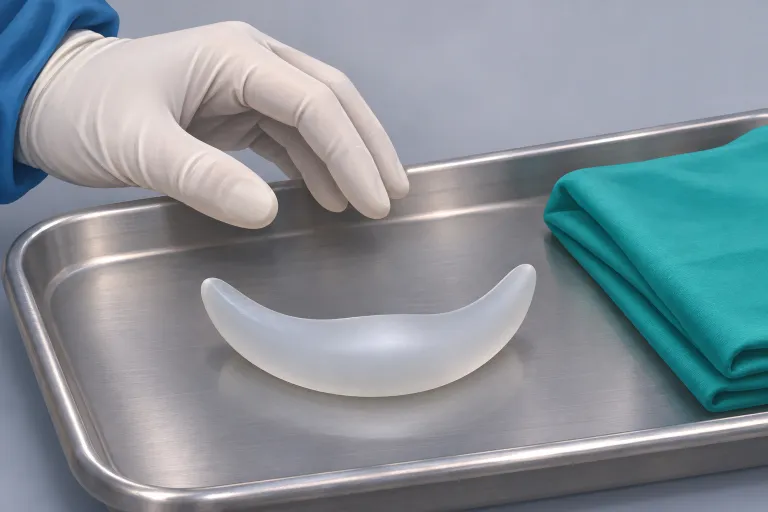
Bone reduction and an added implant change different structures. For prices attached specifically to an implant, see chin implant cost in Thailand.
When the issue may be muscle rather than bone
Yanhee's Thai V-shape page distinguishes injections into the masseter, the jaw muscle, from surgery that trims projecting jawbone. The hospital says botulinum toxin relaxes and weakens that muscle, with an effect lasting about six to eight months.
Ask whether the width you want to change comes mainly from bone, muscle or both. Ask what each proposed treatment would change and whether leaving the area untreated is an option.
When bite assessment belongs elsewhere
Cambridge University Hospitals, part of the UK's National Health Service (NHS) describes orthognathic surgery as corrective jaw surgery for a bite that orthodontics alone can't correct. It describes genioplasty as changing chin position.
If you have difficulty chewing or concerns about how your teeth meet, ask who will assess those symptoms. Ask whether the proposed operation addresses the bite, appearance or both.
Who hospitals describe as a candidate for V-line surgery
Kamol lists completed facial growth, physical health, non-smoking and realistic expectations among its criteria. It links technique selection to the person's facial structure.
For chin augmentation specifically, Cleveland Clinic includes full skeletal maturity and a normal bite among its candidate criteria. Ask how the surgeon assesses your suitability for each proposed part of the operation.
Questions to resolve in a consultation
Take your goals to the consultation as questions about specific changes:
Request an explanation of each proposed procedure before agreeing to a combined plan. Ask which changes the surgeon considers realistic for your anatomy.
Recovery after V-line surgery: what hospitals say
Recovery instructions refer to particular operations. Yanhee's page covers mandibular-angle reduction, while Cambridge University Hospitals covers corrective jaw or chin surgery.
Ask which instructions apply to your exact plan, especially if it combines jaw and chin work. Request separate dates for returning to work, eating normally and exercising.
The first days and weeks
Yanhee tells patients to expect a "two-night stay" in hospital and soreness and swelling for two to three weeks after mandibular-angle reduction. It describes final results over several months.
Kamol describes hospital monitoring that may last one to two nights and chewing difficulty for up to a week. It advises liquid foods, soups and nutritional supplements, with continuous compression for three days and compression "during sleep for one month".

Kamol says patients can typically return to work within seven to ten days. Its aftercare instructions advise avoiding strenuous activity for one month and say exercise can usually resume after four weeks.
Masterpiece's V-line page describes at least one to two hospital days and cold compresses for at least one to two days. Its preparation section says to plan leave from work because "recovery may take approximately 3-5 days", while its recovery section says patients can resume normal activities after one week.
Ask Masterpiece which timing applies to the proposed operation and your work. Its same page advises a facial support brace for at least one month and avoiding strenuous activities such as running or swimming for at least three months.
Diet, numbness and longer recovery
For corrective jaw or chin surgery, Cambridge University Hospitals describes liquids initially, a quick move to soft food, then a gradual return to normal food after four to six weeks. Swelling and bruising are generally worst on days two or three; most swelling goes within a fortnight, with subtler swelling lasting months.
The NHS hospital says most patients stay one or two nights. It recommends about three weeks off work after jaw surgery, around one week for chin surgery only, and no contact sports for two months.
Masterpiece says minor swelling or numbness may persist for one to two months after its V-line procedure. It describes final visible results from the third month onward.
Swelling might linger, according to Masterpiece. Ask your surgeon how follow-up will assess both sensation and the changing contour, rather than using a work-return date as the end of care.
What this means for a patient flying to Thailand
Thailand Beauty, a medical travel agency, says most patients are cleared to fly 10 to 14 days after surgery. Treat that as the agency's travel guidance; ask your treating surgeon for individual clearance and a written follow-up schedule.
Ask how long you should remain near the hospital, which appointments come before departure, and whether any stitches need removal. Also ask who will review you if travel is delayed or a concern develops after returning home.
V-line surgery risks, including nerve injury
Kamol's risk list includes nerve injury and numbness, alongside bleeding, infection, blood clots and reactions to anesthesia. It also lists injury to surrounding tissues or blood vessels, tightness when opening the mouth and possible revision surgery in rare cases.
For genioplasty, Cleveland Clinic says complications are rare but may include lower-lip or chin tingling or numbness. Its list also includes poor wound healing, scarring, bleeding, infection and problems with the implant or fixation hardware.
Ask about the risks of the specific cuts or implants proposed for you. Ask the surgeon to distinguish temporary sensory changes from lasting symptoms and explain how each would be assessed.
What the direct mandibular-angle study found
One retrospective study by Yuan and colleagues, published in 2009, covered 672 intraoral mandibular-angle reductions at Beijing No. 6 Hospital in China. The operations took place from July 2002 to August 2008, and the authors treated and followed 59 cases with postoperative complications.
In that Chinese series, 20 cases had labial numbness, meaning numbness of the lip, with recovery reported after three to six weeks. Five cases had temporary facial-nerve injury, with recovery reported after two to three months.
Those counts equal 2.98% and 0.74%, respectively, using 672 operations as the denominator. These are calculations from the study's counts: 20 / 672 × 100 and 5 / 672 × 100, rounded to two decimal places.
The same study reported asymmetry in 18 cases, infection in three, bleeding and hematoma (a collection of blood) in twelve, and skin necrosis from a tight dressing in one. Skin necrosis means tissue death.
Questions to ask a Thai hospital about risk and follow-up
When a surgeon discusses a published percentage, ask which operation and patient group it covers. Ask for evidence relevant to the procedure proposed for you.
Ask for written answers before confirming surgery:
In this section: chin implant surgery in Thailand, what chin implant surgery costs in Thailand and chin implant surgery recovery.
Frequently asked questions
What is V-line surgery?
It is a label used for different jaw and chin contouring plans. Kamol describes jaw-angle, jaw-body and chin variants; Asia Cosmetic Hospital also describes reducing jawbone thickness.
Ask for the exact operation list, including whether chin narrowing or repositioning is proposed.
Is V-line surgery the same as jaw reduction surgery?
The terms overlap on Kamol's page, which uses jaw shaving, mandible-angle reduction and V-line surgery. Ask which parts of the jaw and chin would actually be changed.
Is V-line surgery the same as a chin implant?
No. Cleveland Clinic describes an implant that adds volume or definition and a sliding genioplasty that repositions your own chin bone. Yanhee's V-shape genioplasty narrows the chin bone.
How long is recovery from V-line jaw surgery?
Yanhee describes two hospital nights and two to three weeks of soreness and swelling after angle reduction. Masterpiece says minor swelling or numbness may persist for one to two months after its V-line procedure, with final results becoming visible from month three.
Ask your surgeon for a timeline for your exact operation and work demands.
Can V-line surgery cause nerve damage or numbness?
Yes. Kamol lists both nerve injury and numbness as risks. In Yuan's 2009 Chinese study of 672 intraoral mandibular-angle reductions, lip numbness and temporary facial-nerve injury were reported, with recovery described over weeks and months respectively.
Ask Whether the Surgeon Plans Bone Surgery, an Implant or Neither
Tell us the procedure, your budget and your dates, and any hospitals you are considering.
Get My Free Quote →Free, no obligation. Nothing goes to a clinic without your OK.