Is a BBL Safe? Risks, Fat Embolism and Safety Checks in Thailand
A Brazilian butt lift (BBL) isn't risk-free. It carries serious risks, including injected fat blocking a blood vessel in the lungs, which the UK National Health Service (NHS) says can be fatal. A 2022 statement endorsed by the American Society of Plastic Surgeons (ASPS) and other societies supports real-time ultrasound to help keep fat above the fascia of the gluteal muscles.
If you're considering a Brazilian butt lift in Thailand, ask the operating surgeon to assess your risk and explain the complication plan.
Clinics cannot pay to be listed or ranked higher on AsiaPatient.
Why BBL safety is a serious question
An ASPS surgeon interview describes BBL as liposuction to collect fat, followed by transfer into the buttocks. The British Association of Aesthetic Plastic Surgeons (BAAPS) lists fat embolism, death, blood loss that may require transfusion and sepsis among major and serious complications.
What fat embolism means in this procedure
The NHS describes a fat embolism as a blood vessel blocked by fat. For BBL, its main concern is a blockage in the lungs, called a pulmonary embolism, which can be fatal.
The surgeon interviewed by ASPS says accidental injection into muscle can cause a fat embolus and death.
What published risk figures report
The 2022 BAAPS review describes a 2017 survey sent to 4,843 plastic surgeons, which reported 32 fatal and 103 nonfatal fat emboli in 198,857 procedures. The original study by Mofid and colleagues specifies that 692 responding surgeons worldwide reported those cases over their careers.
BAAPS reports an extrapolated death estimate as high as 1 in 2,351, which it calls potentially misleading and inaccurate. Its review also reports an earlier mortality figure of 1 in 2,500 from fat embolism and estimates the actual risk of death nearer 1 in 15,000.
One 2025 study by Reyes and colleagues retrospectively analyzed records of 177 patients treated in Bogota, Colombia, with Doppler ultrasound-assisted fat grafting between February and May 2024. Its abstract reports five patients with hematomas, two with seromas (fluid collections) and one with suture dehiscence (a stitched wound opening).
That study reported no infections, deep vein thrombosis, pulmonary embolism or deaths in its patients.
Ask the surgeon which evidence they use when discussing your risk, including how closely its patients and technique match the operation proposed for you.
Other BBL risks
The ASPS buttock-enhancement risk list includes the complications below. Ask the surgeon which apply to your proposed surgery and how they would be managed.
| Risk or complication | Source | Scope |
|---|---|---|
| Bleeding or hematoma (a collection of blood), infection and fluid accumulation | ASPS | Buttock-enhancement risk list |
| Fat necrosis (death of fat tissue), altered sensation and persistent pain | ASPS | Buttock-enhancement risk list |
| Poor healing, scarring, asymmetry and possible revision surgery | ASPS | Buttock-enhancement risk list |
| Deep vein thrombosis (a blood clot in a deep vein), heart or lung complications and anesthesia risks | ASPS | Buttock-enhancement risk list |
| Cellulitis, described as a serious skin infection, and contour deformity | NHS | Additional BBL risks |
Ask the surgeon how likely these complications are for you and how they would be treated.
Safety practices professional bodies describe
Keep fat in the subcutaneous plane
Subcutaneous means under the skin. The ASPS multisociety advisory issued in 2019 describes confining fat grafting to that space, without crossing the gluteal fascia, the tissue covering the buttock muscles.
The advisory says research suggests this can minimize mortality risk. BAAPS advises considering staged procedures if more volume is wanted, rather than injecting deeply.
Ask where the surgeon plans to place the fat and what happens if the intended volume can't be accommodated in that layer.
Use real-time ultrasound during injection
The 2022 joint statement supports ultrasound to monitor the cannula tip while fat is injected. A cannula is the tube used to place the fat; the statement describes real-time imaging as an addition to a qualified surgeon's skill and judgment.
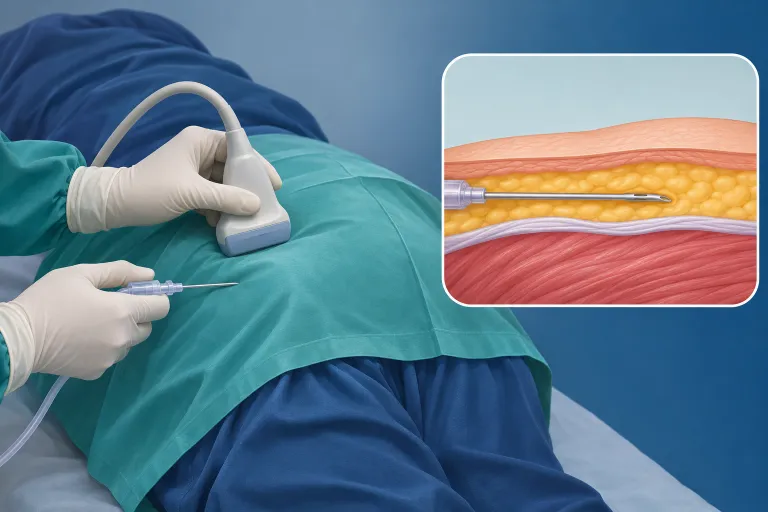
Ask whether ultrasound will be used during injection, who will interpret the image and what training that surgeon has in the technique.
Surgeon involvement, facility privileges and case oversight
The joint statement says non-surgeon assistants and inadequately trained surgeons shouldn't perform critical portions, including fat harvesting and injection. For office-based surgery, it says surgeons should hold privileges (permission to perform the procedure there) in a country- or state-approved or licensed surgical center or hospital.
In the ASPS interview, the surgeon advises choosing someone experienced in BBL and cautions about clinics doing many operations per day. Ask how many BBLs your surgeon has scheduled that day and who performs each part.
Questions to ask the surgeon and facility before booking
The NHS advice on cosmetic surgery abroad says to meet the treating surgeon, avoiding consultations only with sales staff. Request written answers that refer to your proposed operation.
Questions about technique and surgical team
Use these questions to discuss the ASPS-endorsed safety positions:
- Will all fat be placed above the gluteal fascia?
- Will you monitor the cannula tip with real-time ultrasound while injecting?
- Who performs the liposuction and fat injection?
- What specialist qualification and BBL experience does the operating surgeon have?
- How many BBLs will that surgeon perform that day?
Ask how your health and medicines affect the proposed plan. The BAAPS review lists unstable or untreated medical conditions among reasons not to proceed or to use extreme caution.
Questions about the facility and Thailand verification
The Society of Plastic and Reconstructive Surgeons of Thailand (ThPRS) advises checking the surgeon's specialist diploma, society membership and professional license, along with the clinic's license. Its guidance for operations under general anesthesia says plastic surgeons should operate only in a hospital accredited for safety to an international standard.
Ask for the surgeon's Thai Board qualification, full name and license details, plus the facility's name and license. Ask which anesthesia is planned, who administers it and where you would be transferred if more intensive care were needed.
The ThPRS member search includes Full Members who make their profiles public. If a surgeon doesn't appear, the society directs readers to its Secretariat to check membership.
Questions about follow-up, complications and insurance
The NHS advises asking what happens if you need further surgery and what insurance covers. It says travel insurance doesn't normally cover things going wrong in surgery.
Your follow-up arrangements might differ. The same NHS guidance says overseas clinics may not offer follow-up treatment or may offer it to a different standard.

- Who will examine me after discharge, where and on which dates?
- How can I reach the surgeon outside normal opening hours?
- Which hospital handles urgent complications?
- Who arranges care after I return home?
- What would additional treatment cost, and which exclusions apply to any cover sold with the operation?
What Thai hospitals, clinics and listings say about BBL safety and follow-up
Ekachai Hospital lists "Buttock lifting with Fat Transfer" with general anesthesia and three hospital nights. Ask what monitoring those nights include and which appointments follow discharge.
Yanhee's published technique statement
Yanhee Hospital says it places BBL fat in the subcutaneous plane only, never into or through muscle. Ask the surgeon to describe how the injection depth is monitored during your operation.
Yanhee's two-night butt-lift package concerns skin-removal gluteoplasty. For BBL, request its own hospital-night count, follow-up dates, stitch-removal arrangements and travel instructions.
Rattinan's published information
Rattinan's buttock-augmentation page describes surgery in a certified sterile operating room and attentive post-operative care. Ask what that care includes for fat transfer, who carries it out and how long it continues.
Request the injection-plane and ultrasound plan from the operating surgeon. Ask for the discharge criteria and the route for urgent assessment after you leave the clinic.
Agency package language and the clinical plan
Bookimed's Thailand BBL listing describes hospital stays and follow-up within particular offers. MedCasts also describes typical package components, including tests and medicines; both are agency descriptions.
Ask the operating hospital to confirm the care attached to your booking. Request the surgeon's name, the monitoring arrangements and the appointment schedule, even when an offer uses the word "aftercare."
Recovery monitoring, travel and warning signs
The 2022 joint statement says surgeons treating traveling patients need comprehensive care protocols before and after surgery. It says they should be available to provide care directly or participate in managing complications.
Planning the stay and return journey
MyMediTravel says to stay in Thailand at least 14 days for follow-up checks. Thailand Beauty, a medical-travel coordination service, recommends a minimum of 10 to 14 days, including consultation, surgery and follow-up.
The third-party Plastic Surgery Surgeons blog gives 10 to 14 days and suggests written surgeon clearance before flying. Keep those agency and third-party intervals separate from the departure plan your surgeon gives you.
Use the BBL recovery in Thailand guide for planning context. Before booking the return journey, ask which visits must happen first and how a change in recovery would affect departure.
Monitoring and warning signs to get in writing
Request written warning signs and emergency instructions before surgery.
Ask the surgeon to distinguish expected recovery changes from symptoms that need urgent assessment. Request instructions for symptoms arising at the hotel, during the journey or after you're home.
Have the team write down the contact's name, out-of-hours number and emergency destination. Ask what to do if nobody answers and who will communicate with the doctor treating a complication.
Also ask who decides whether you can fly. These questions put the traveling-patient care responsibilities described in the ASPS-endorsed statement into a plan you can use.
Budgeting for monitoring and follow-up
For planning costs, see BBL cost in Thailand. Ask for the clinical services in writing alongside the amount quoted.
Request separate answers on anesthesia, hospital nights, medicines, garments and follow-up visits. Ask how additional nights, treatment of complications or another operation would be charged, following the NHS advice to discuss further surgery before booking abroad.
In this section: BBL in Thailand, butt implants BBL, what a BBL costs in Thailand, hip dips BBL, BBL recovery and skinny bbl BBL.
Frequently asked questions
Is a BBL safe with ultrasound?
The 2022 ASPS-endorsed statement supports real-time ultrasound to help keep injection above the muscle fascia. Ask your surgeon about the risks of your complete operation, including anesthesia, liposuction and postoperative care.
What is BBL fat embolism?
The NHS describes injected fat blocking a blood vessel in the lungs as the main BBL safety concern. This can be fatal.
What is the BBL death rate?
The BAAPS review presents historical estimates and questions the accuracy of an extrapolated survey figure. In 2022, BAAPS estimated the mortality risk from fat embolism nearer 1 in 15,000. Ask the surgeon how they assess your risk.
How should I check a BBL surgeon and facility in Thailand?
Use the ThPRS patient checklist to ask about specialist qualifications, professional licensing and the facility. Thailand's Healthcare Accreditation Institute certificate register shows hospital levels and dates; the American Accreditation Commission International list shows each listed organization's program and status.
Match the facility's full name and location to the relevant entry. Ask the surgeon to explain their BBL experience separately.
Does a small or awake BBL remove the risk?
Cleveland Clinic says local anesthesia may be used when only a small amount of fat is transferred. It also lists fat embolism and death among BBL risks.
Ask the surgeon how the proposed volume and anesthesia affect your risks, and request the same explanation of injection depth and monitoring.
How long should I stay in Thailand after a BBL?
MyMediTravel advises at least 14 days for follow-up. Thailand Beauty recommends 10 to 14 days minimum; both are agency guidance.
Ask the operating surgeon for your appointment dates and written departure instructions before setting your return flight.
Read next
- BBL revision: what the evidence says about repeat fat transferWhat a BBL revision can mean, what published series report, what they leave open, and the follow-up questions to settle before travelling.
- BBL recovery: the timeline, the risks and the trip homeWeek by week after a Brazilian butt lift: sitting, garments, fat survival, the fat embolism risk, and what Thai hospitals print about stay and follow-up.
- Skinny BBL: who it suits and what it costs in ThailandWhat a skinny BBL means, how much donor fat it needs, who may suit it, the safety rules, recovery and what Thai hospitals and clinics print for it.
- Butt implants or a BBL: which one and whyHow butt implants and fat-transfer BBLs differ in material, donor-fat needs, recovery, risks and questions to discuss in Thailand.
Ask How the Surgical Team Plans to Reduce BBL Risk
Tell us the procedure, your budget and your dates, and any hospitals you are considering.
Get My Free Quote →Free, no obligation. Nothing goes to a clinic without your OK.